REVIEW · ANTIGUA GUATEMALA
Antigua Guatemala: Morning Tour from Guatemala City
Book on GetYourGuide →Operated by Gray Line Guatemala · Bookable on GetYourGuide
Antigua in five hours feels like a gift. I love the mix of colonial churches and arches with the hands-on stops at the Jade Factory and Museum. You get enough time to see the big Antigua landmarks without feeling like you’re sprinting across cobblestones.
There is one main catch: this is a walking tour on uneven streets and ruins, so it’s not suitable for mobility impairments.
In This Review
- Key Things You’ll Notice on This Antigua Morning Walk
- Antigua at Morning Speed: How the 5-Hour Format Works
- Getting There From Guatemala City: Pickup That Sets the Tone
- Jade Factory and Museum: A Real Look at Craft Traditions
- El Carmen Church Ruins and the Craft Market Beside Them
- La Merced Church and Santa Catalina Arch: When Antigua’s Details Matter
- La Merced Church: Ultra-baroque facade, clear storytelling
- Santa Catalina Arch: A shortcut built for privacy
- Central Park in a Spanish Grid, Plus Las Sirenas Fountain
- La Unión Tank Laundry: Antigua’s Iconic Public Life
- Agua Volcano Views: What You Can Expect and How to Prep
- Price and Value: Is $38 Worth a Morning in Antigua?
- Who Should Book This Tour (and Who Might Want Another Plan)
- Should You Book This Antigua Morning Tour From Guatemala City?
- FAQ
- How long is the Antigua Guatemala morning tour?
- Is hotel pickup included from Guatemala City?
- What is included in the price, and what is not?
- How big is the group?
- What languages are available for the guide?
- Can I cancel for free, and what should I bring?
Key Things You’ll Notice on This Antigua Morning Walk
- Small-group, easygoing pace with a gentle three-hour walk and up to 10 people.
- Jade carving tradition at the Jade Factory and Museum, plus a chance to shop at the craft market.
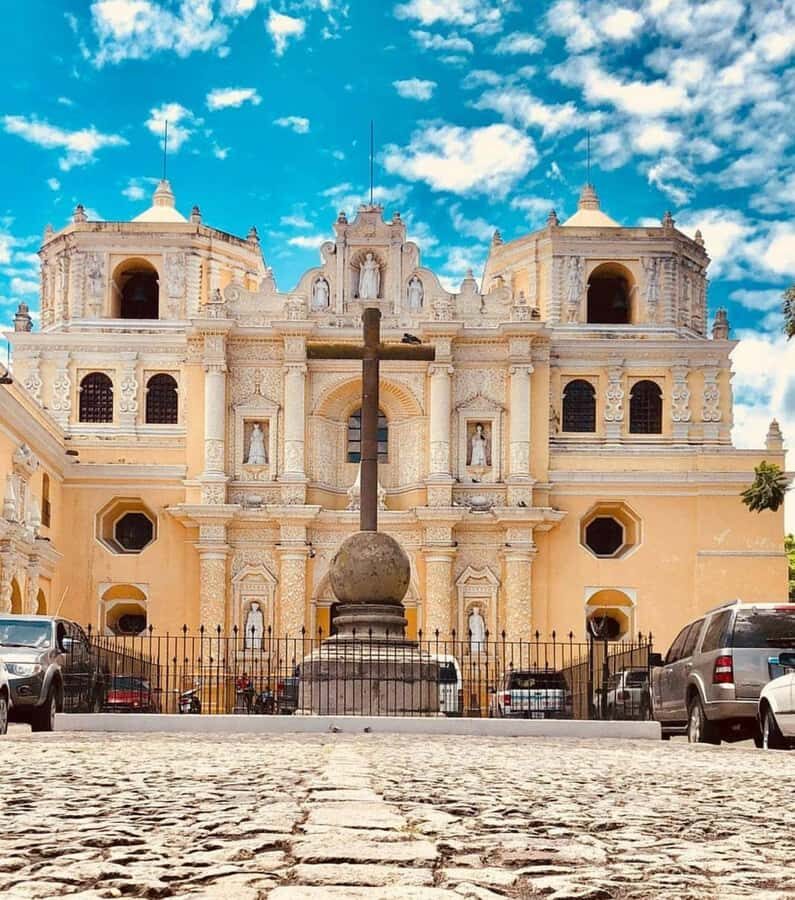
- Ultra-baroque La Merced Church with the San Pedro Nolasco sculpture on its facade.
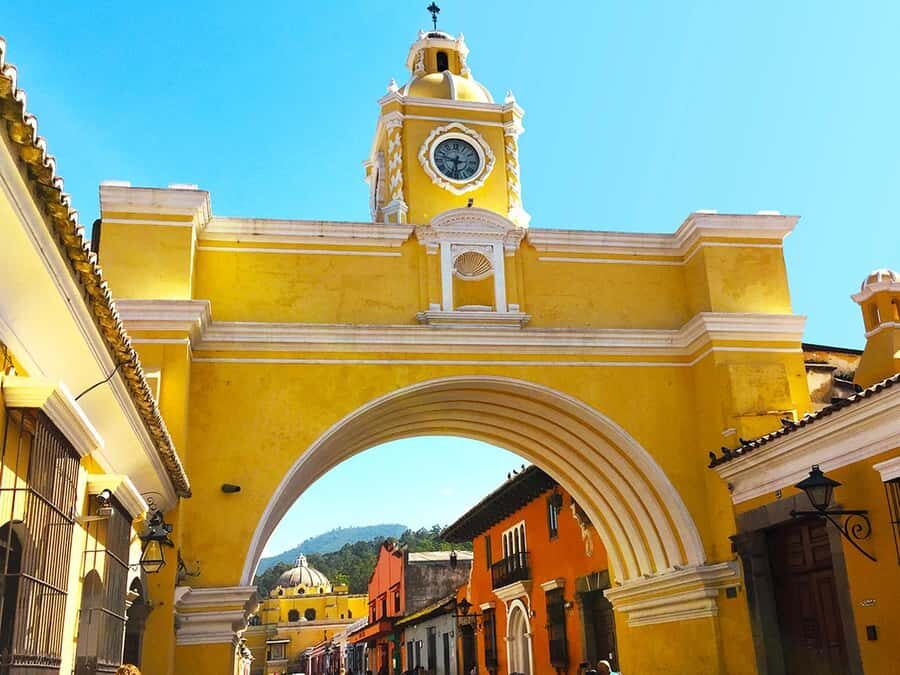
- Santa Catalina Arch backstory, including changes after the 1773 earthquakes and a French clock.
- Central Park + Las Sirenas fountain, where Antigua’s grid layout meets local legend.
- La Unión tank (public laundry), a landmark tied to how everyday life worked in the 1800s.
Antigua at Morning Speed: How the 5-Hour Format Works
This is a great way to see Antigua Guatemala if you’re staying in Guatemala City or you just want a focused taste of the UNESCO old town. The total time is about 5 hours, but the walking part is a gentler three hours, which makes a difference on Antigua’s cobblestone streets.
The tour is built for a smooth rhythm: you get round-trip transfer (from most hotels in Guatemala City and also Antigua), then you meet your local bilingual guide in Antigua. From there, you follow a route through the colonial core—churches, arches, ruins, and public-history stops—before heading back to Guatemala City.
The small-group size (limited to 10 participants) matters here. It helps keep the pace comfortable, and it makes it easier to ask questions without your guide talking to the entire planet at once. One thing I’d keep in mind: there’s no food or beverages included, so plan your energy accordingly.
You can also read our reviews of more city tours in Antigua Guatemala


Getting There From Guatemala City: Pickup That Sets the Tone
You’ll be picked up at your hotel in Guatemala City, then transferred to Antigua. In practice, that removes the stress of figuring out transport on your own—especially helpful if you’re arriving for the first time and you’d rather spend your morning seeing Antigua instead of studying maps.
Because pickup is hotel-based, treat it like an appointment. Double-check you understand exactly where you’ll be picked up (hotel entrance, lobby, or front desk area) so you’re not standing around with nothing to do but watch the street. Once in a while, people run into pickup issues when the details don’t match their expectation, so a quick confirmation the day before can save frustration.
This tour is run by Gray Line Guatemala, and the experience is set up as a planned walking route rather than a free-roam wander. That’s good if you want structure and reliable timing, like you’ll be led to the right facades and the right corners of Central Park.
Jade Factory and Museum: A Real Look at Craft Traditions
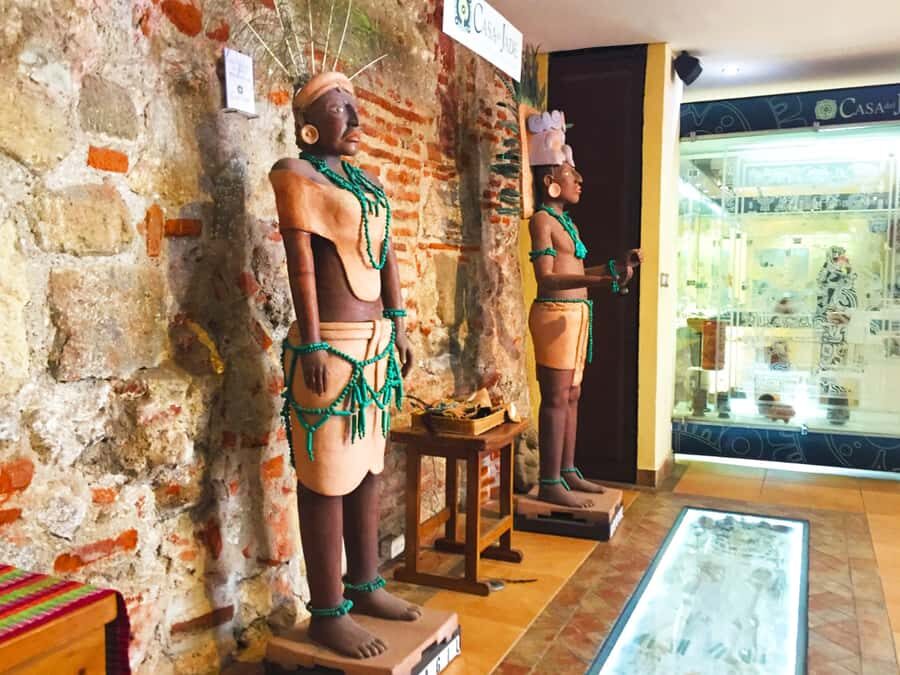
The first major stop is the Jade Factory and Museum. This isn’t just a photo stop—it’s a chance to see how ancient Guatemalan carving traditions continue in a modern setting. Jade has long been part of the region’s identity, and Antigua is one of the places where craft culture is easy to connect to the colonial streets around it.
What I like about this stop is that it gives you a break from pure sightseeing. After that, you’re ready to walk again with a clearer sense of what you’re seeing and what you might want to buy. And yes, it’s a shopping-adjacent stop, but it’s also a learning-focused one: you’re getting context before you browse.
If you want to bring home something that doesn’t feel like random souvenir clutter, this is a smart place to start—because you’ll already understand what you’re looking at. Just keep your expectations realistic: this is a museum-style encounter, not a hands-on workshop where you’ll carve your own jade.
El Carmen Church Ruins and the Craft Market Beside Them
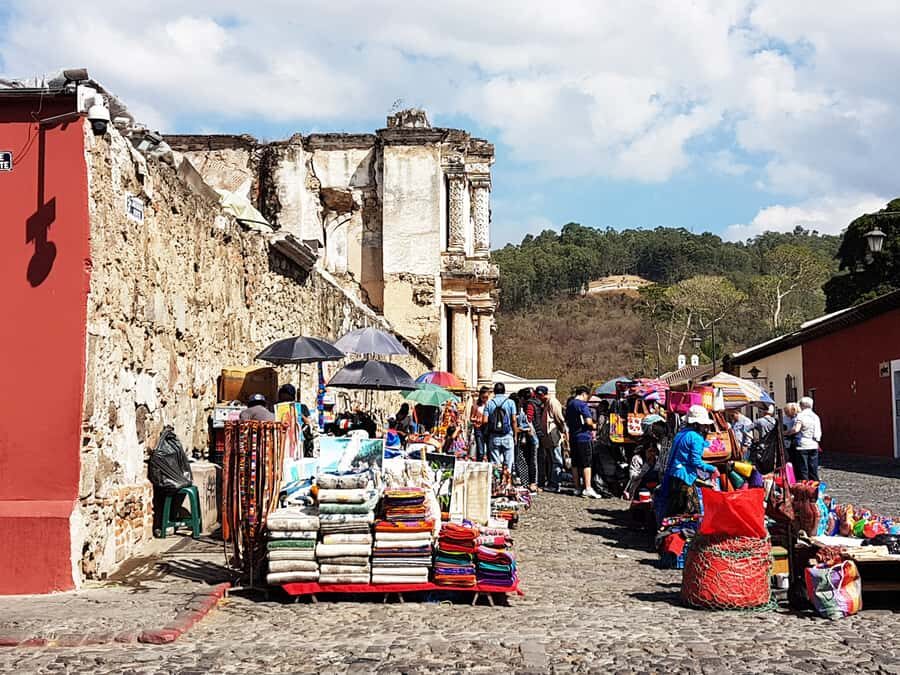
Next, you’ll visit the ruins of El Carmen church and then browse the craft market beside the ruined building. Antigua’s ruins have a special kind of mood. They show what the city lost, but they also show how the place kept going—partly restored, partly remembered.
The best part of pairing ruins with a market is that they serve two different needs. The ruins slow your pace and give you a visual anchor. Then the market gives your brain something practical to do: look for textiles, crafts, and locally made items while your guide keeps walking you toward the next landmark.
A small word of advice: if you’re picky about souvenirs, you’ll have better luck here than later when you’re tired. Markets get easier to shop when you’re not trying to do it while sprinting to a clock.
La Merced Church and Santa Catalina Arch: When Antigua’s Details Matter
Antigua’s big sights are easy to recognize, but the fun is in the details your guide points out. Two stops show this perfectly: La Merced Church and Santa Catalina Arch.


La Merced Church: Ultra-baroque facade, clear storytelling
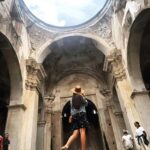
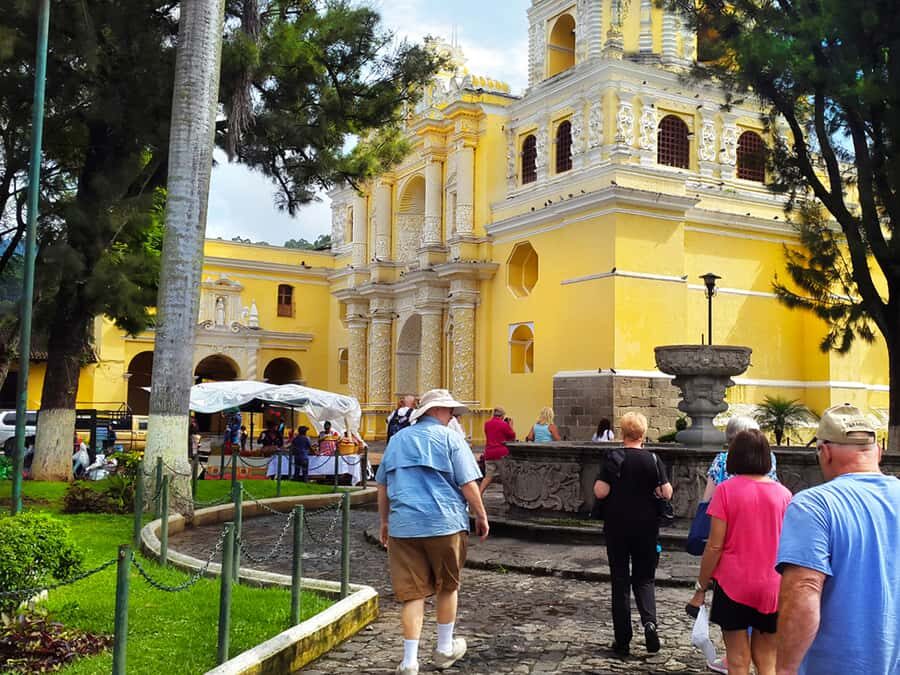
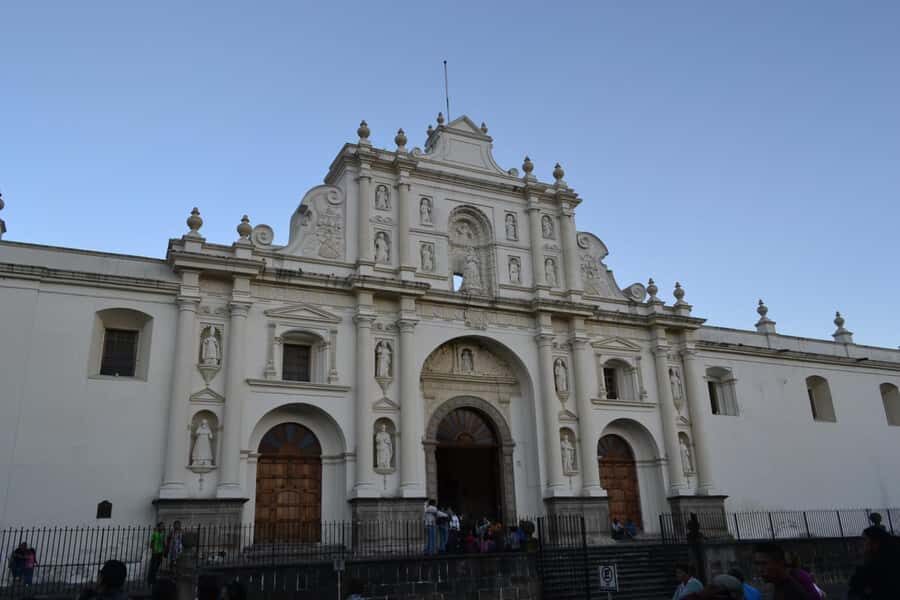
You’ll see La Merced Church, known for its ultra-baroque style. One highlight is the sculpture on the upper facade: San Pedro Nolasco, founder of the Mercedarian Order. That kind of specific detail matters. It turns the church facade from something you just pose in front of into something you understand.
Also, this church has two bell towers, which gives you more angles for photos and helps you orient yourself as you keep walking through the historic core.
Santa Catalina Arch: A shortcut built for privacy
Then comes Santa Catalina Arch, built to connect the nuns between cloisters so they could avoid being seen. That’s a fascinating social detail, and it helps you read the city as a place where daily life shaped the architecture.
After the 1773 earthquakes, the arch became even more important due to alterations. The changes included construction of a turret and the inclusion of a Lamy Amp Lacroix clock of French origin. You’ll see how layered Antigua is—religion, everyday rules, disaster, and imported influence all showing up in one structure.
If you like architecture, this pair of stops is a strong reason to book this tour instead of just wandering. You’ll get the “why” behind the “look.”
Central Park in a Spanish Grid, Plus Las Sirenas Fountain
Next up is Central Park, the heart of Antigua laid out on the traditional grid pattern used in Spanish colonial urban planning. This is one of those areas where it’s easy to underestimate what you’re looking at. The grid isn’t random—it’s how the city organized power, civic life, and public space.
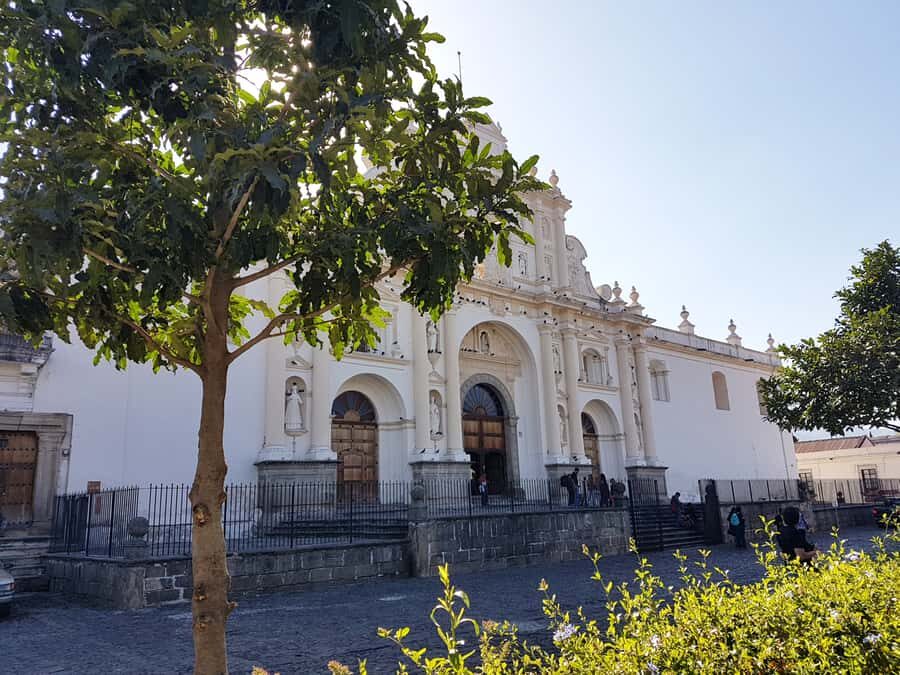
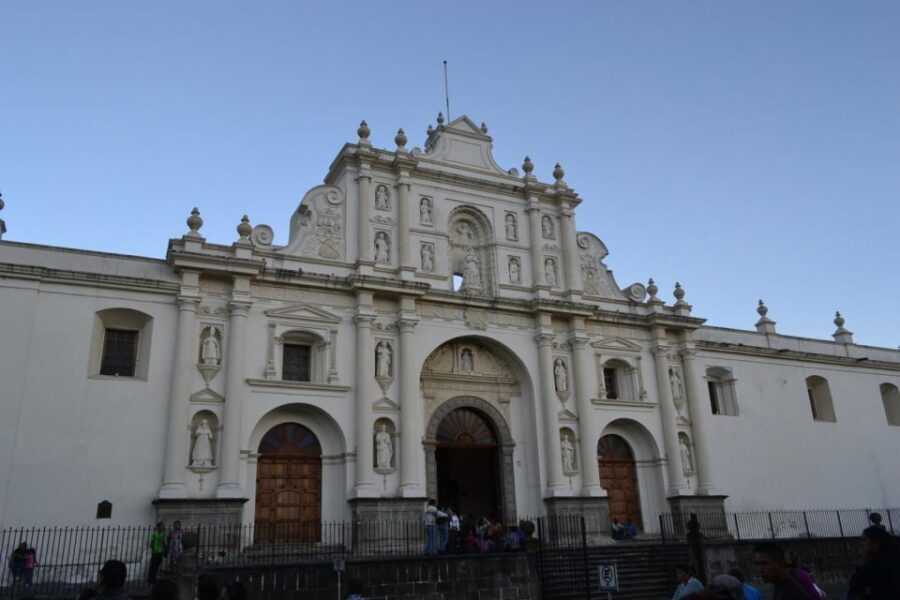
Around the park, you’ll find landmark buildings that help define Antigua’s public face: the Palace of the General Captains, the Town Hall, the Cathedral of San Jose, and the Trade Portal. You don’t need to memorize their names to enjoy the effect, but your guide can give you just enough orientation that the city starts making sense.
In the park itself, you’ll also see the Las Sirenas fountain, with a folk story tied to the Count of La Gomera. The story says the count ordered the fountain built in memory of his daughters, who—after giving birth—didn’t want to breastfeed their children. The tale goes on to describe his order to tie them to a trunk in the center of a waterhole, where they died of thirst and hunger.
Whether or not you believe every version of the story, it’s a great example of how Antigua keeps culture alive through local legend. It’s also a reminder that public space here has always been about more than scenery.
La Unión Tank Laundry: Antigua’s Iconic Public Life
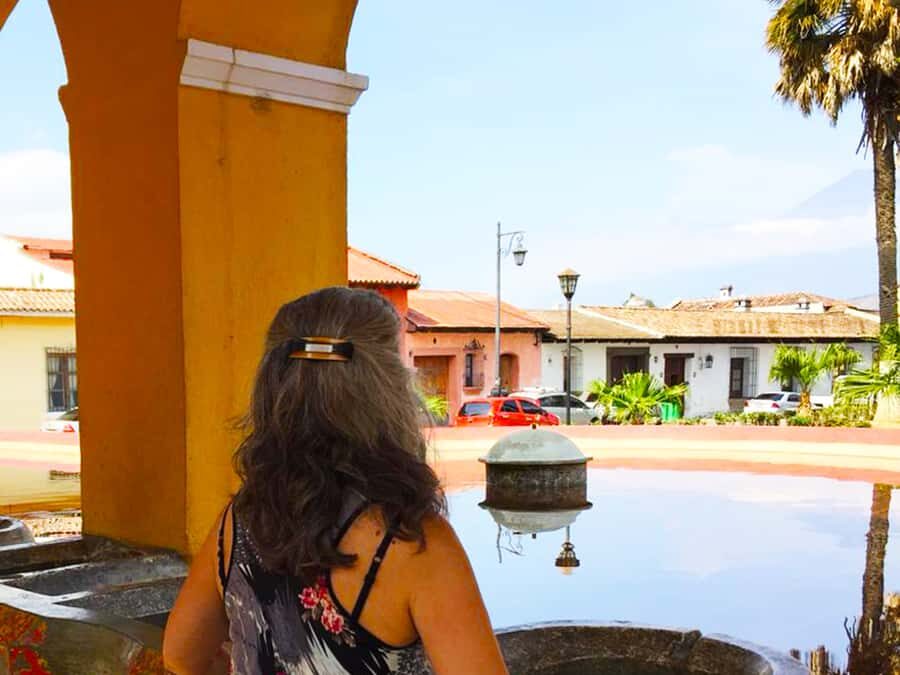
The last big stop is La Unión tank, one of the city’s most iconic laundries. The idea is simple but powerful: when big houses had proper washing facilities, most residents didn’t. So housewives went to public laundries like this one.
This site was inaugurated on February 3, 1853, and that date gives you something concrete to hold onto while you’re walking through the colonial streets. It connects the postcard Antigua you see today to the very ordinary routines that shaped daily life back then.
One of the best ways to read Antigua is to balance the grand buildings (churches and civic structures) with places that show labor and routine. That’s why La Unión tank lands so well at the end of the tour—it reframes what you’ve seen so far.
Agua Volcano Views: What You Can Expect and How to Prep
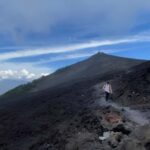
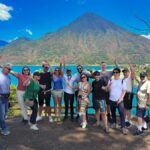
Your route is described as including wonderful views of the Agua Volcano from Antigua. Even if the viewing angle is brief, it’s still a payoff. Antigua’s most satisfying moments often come when the scenery opens up between buildings.
To catch those moments, bring what the tour recommends: a camera, plus a hat and sunglasses. Antigua mornings can feel sunny even when the air isn’t that warm yet. Comfortable shoes matter too, because if your feet are unhappy, you’ll miss the little pauses where the volcano view appears between street corners.
If you like photos, keep your camera handy rather than packed away. Antigua rewards quick sightings, and your guide will keep you moving through a tight route.
Price and Value: Is $38 Worth a Morning in Antigua?
At $38 per person for about 5 hours, the value depends on what you want from the day. Here’s the honest math: you’re paying for round-trip transfers, a bilingual guide (English and Spanish), and a structured walking route through multiple major Antigua landmarks and cultural stops.
For a morning trip, that’s a pretty fair deal, especially if you’re staying in Guatemala City and you don’t want to manage transportation on your own. You also get a small-group limit (max 10), which helps the guide manage the pace and answer questions without turning it into a stampede.
The trade-off is that food and beverages are not included. So if you take breakfast late or you get snacky during a three-hour walk, you’ll want to plan for it outside the tour. Think of this as a sightseeing program, not a meal included experience.
Also, even though the walking tour is described as gentle, Antigua’s ground isn’t flat. You’ll want shoes with grip, because cobblestones can turn a relaxed morning into an unplanned calf workout.
Who Should Book This Tour (and Who Might Want Another Plan)
This is a smart choice if you want:
- A structured overview of Antigua’s colonial highlights
- A mix of big architecture and everyday history (like the laundry tank)
- Craft culture beyond just window shopping (jade museum + market time)
- A comfortable small-group pace without committing to a full day
It may not be ideal if:
- You need step-free access or are dealing with mobility impairments
- You want long, unstructured free time in Antigua (this is a guided route with set stops)
One more nuance: some guides are known for keeping the experience lively and photo-friendly, and there’s at least one guide name that shows up often—Adán—described as warm, entertaining, and helpful with getting good shots. Guides can vary, but the overall tone is set up to be interactive, not just a lecture.
Should You Book This Antigua Morning Tour From Guatemala City?
If you’re choosing between DIY Antigua and a guided morning program, I’d book this one. It’s a well-paced introduction to UNESCO-era Antigua that balances churches, arches, public history, and a real craft stop. The route is short enough to feel doable, even if you’re coming from Guatemala City, and the $38 price feels aligned with the included transfers and guided walking.
Do it with one practical mindset: wear the right shoes, plan for snacks because food isn’t included, and confirm pickup details so the morning starts clean. If those boxes are checked, this tour delivers exactly what you want from an Antigua morning—meaningful sights without turning your day into an endurance test.
FAQ
How long is the Antigua Guatemala morning tour?
The tour lasts about 5 hours total, with a gentle 3-hour walking portion in Antigua.
Is hotel pickup included from Guatemala City?
Yes. Round-trip transfer is included from most hotels in Guatemala City (and also from Antigua), with pickup at your hotel in Guatemala City.
What is included in the price, and what is not?
Included are the round-trip transfers and a bilingual guide (English and Spanish). Food and beverages are not included.
How big is the group?
It’s a small group limited to 10 participants.
What languages are available for the guide?
The guide is available in English and Spanish. Other languages may be available by request, subject to additional costs and guide availability.
Can I cancel for free, and what should I bring?
You can cancel up to 24 hours in advance for a full refund. Bring comfortable shoes (and it’s also recommended to bring a hat, sunglasses, and a camera). The tour isn’t suitable for people with mobility impairments, and pets are not allowed.