REVIEW · GUATEMALA CITY
Guatemala City Afternoon Sightseeing Tour
Book on Viator →Operated by Gray Line Guatemala · Bookable on Viator
Need an easy afternoon start in Guatemala City?
This 3-hour sightseeing loop is a practical way to get oriented, mixing major viewpoints and landmark streets with real local texture like the Historic Center’s plazas and the shopping around Central Market. I like that it includes hotel pickup and drop-off, so you spend less time figuring out routes and more time looking out the window, taking photos, and getting an explained tour instead of just driving past things.
My second big favorite is the finish in the Central Market area, where you can slow down and browse without feeling rushed. There is one consideration: a small number of reviews mention missed pickup or a guide who didn’t arrive, so I recommend you confirm your pickup details the day before and keep your phone handy.
In This Review
- Key highlights I’d plan around
- Why this Guatemala City afternoon tour works for short stays
- The one drawback to take seriously
- How the 3-hour route is paced (and why it feels manageable)
- Stop 1: Avenida Las Américas and the Berlin Plaza view
- Stop 2: Avenida La Reforma and its “Italy-inspired” statues
- Stop 3: Iglesia Yurrita, a Baroque-style chapel with mixed roots
- Stop 4: Centro Cívico and Guatemala City’s governmental core
- A few drive-by or short-walk moments: Lux Theater, Hotel Pan American site, and El Portalito
- The Lux Theater
- The Hotel Pan American site
- Rubio Passage (El Portalito)
- Stop 6: Plaza de la Constitución and the Cathedral area
- Why this stop is worth your attention
- Stop 7: Mercado Central shopping behind the cathedral
- Shop smart in a short market stop
- Stop 8: Iglesia Santo Domingo (Nuestra Señora del Rosario Basilica)
- Getting the most out of the guide you get
- Comfort, transport, and what to bring for an afternoon run
- Price and value: what $58 buys you (and what it doesn’t)
- Should you book this Guatemala City afternoon tour?
- FAQ
- FAQ
- How long is the Guatemala City afternoon sightseeing tour?
- Is hotel pickup and drop-off included?
- What major places do you visit during the tour?
- Do I need to pay for admission tickets?
- Is food included in the price?
- What is the tour price?
- Does the tour depend on good weather?
- Can you provide guides in other languages?
Key highlights I’d plan around

- Hotel pickup and round-trip transport so you don’t waste your afternoon on logistics
- Historic Center focus with time at Plaza de la Constitución and the Metropolitan Cathedral area
- A mix of streets, viewpoints, and churches rather than only one type of stop
- Central Market shopping time for spices, crafts, and jade items
- Guides with standout English skills in some runs, including Juan Pablo, Adolfo, and Winston Cuk
Why this Guatemala City afternoon tour works for short stays
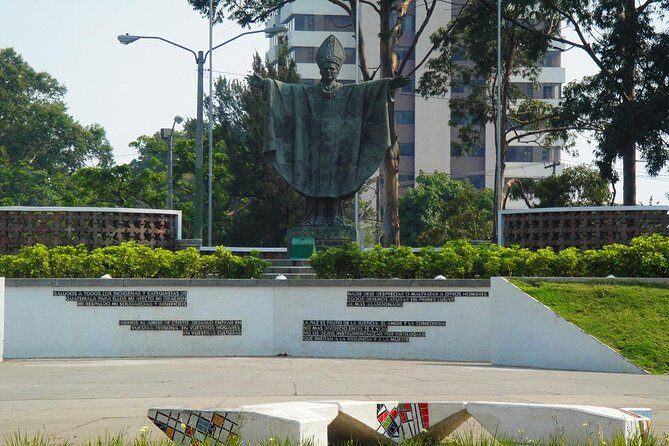
Guatemala City is big, busy, and not always “easy mode” for first-timers. This tour helps because it’s built like an orientation lesson: you’re in a vehicle for the long drives between key areas, then you get purposeful walking time where it matters.
For the price of $58 (about three hours), you’re not paying just for driving—you’re paying for someone to connect the dots: what you’re seeing, why it’s there, and what to notice while you’re standing in front of it. If you’re short on time—an afternoon flight, a day between day trips, or a first arrival—I’d choose this kind of guided overview over trying to DIY your own route.
The best tours also come with excellent guide energy. Reviews highlight guides such as Juan Pablo, Adolfo, and Winston Cuk for clear explanations and friendly, question-friendly guiding. That matters, because a city overview becomes much more useful when you can ask real questions on the spot.
You can also read our reviews of more city tours in Guatemala City

The one drawback to take seriously
The itinerary is solid, but the experience depends on pickup showing up. A couple of reviews report no-show pickup or guide non-arrival. It doesn’t define the whole tour, but it’s enough that you should treat confirmation as part of your plan. If you’re going to be relying on this as your only Guatemala City activity, do a quick check the day before and be ready at pickup time.
How the 3-hour route is paced (and why it feels manageable)
This tour runs about three hours, and the schedule is designed to keep stops short and useful. Many locations are listed with free entry, so you’re not losing time to ticket lines.
You’ll typically move like this:
- Drive between zones via major avenues
- Stop for brief viewing and photo time
- Walk short stretches in the Historic Center and market areas
- Finish with a practical shopping stop (Central Market)
The tour also allows for route order changes depending on where you’re picked up, so don’t worry if the sequence varies slightly.
Stop 1: Avenida Las Américas and the Berlin Plaza view
You start with hotel pickup (from selected hotels) and roll out toward Avenida Las Américas. This avenue is named in honor of countries in the American continent and is lined with plazas and monuments set in garden spaces. The stop is short—about 25 minutes—but it’s a good warm-up. You’ll get your first sense of how the city organizes public space around major roads.
Next comes a panoramic moment from Berlin Plaza, where you can look out over part of the city and see the Pacaya volcano landscape in the distance. This is one of those stops that pays off even if you don’t know the city well yet: it gives you a geographic reference point so later landmarks feel less random.
What I’d do here: take a wide photo first, then ask your guide what to look for as the day continues. That’s when an orientation tour starts working.
Stop 2: Avenida La Reforma and its “Italy-inspired” statues
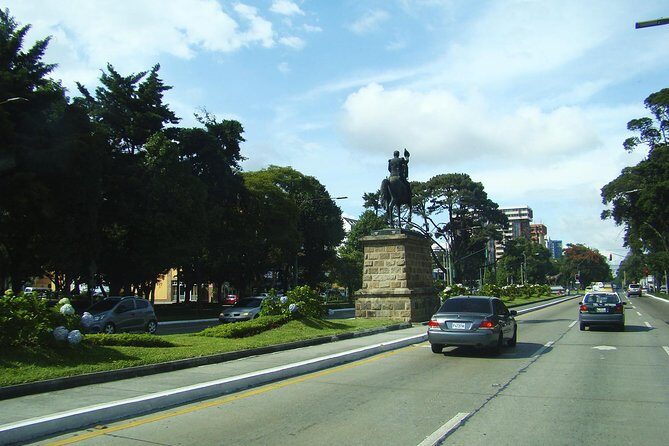
From there, you continue along Avenida La Reforma, a major corridor built with design inspiration from French avenues. The big reason to care is the statues: there are carvings in stone, bronze, and marble, described as brought from Italy.
This stop is another “quick read” moment—about 25 minutes—so you’ll want to pay attention to details rather than expect a long museum-style experience. If you like city architecture and public art, this is a nice one, because it’s directly tied to how Guatemala City presents itself in stone and metal along major boulevards.
Potential drawback: if you’re only in the mood for deep walking, this part may feel too fast. But it’s still useful because it sets you up for the more walk-heavy Historic Center stops later.



Stop 3: Iglesia Yurrita, a Baroque-style chapel with mixed roots
Iglesia Yurrita is a private chapel known for a mixed Baroque style with Romanesque and Byzantine elements. It’s also tied to a story: it was built as a votive offering by Felipe Yurrita, linked to a survival during the eruption of the volcano Santa Maria.
The stop is listed at about 25 minutes, and it works best if you like religious architecture and local legends. This is the kind of stop where a guide’s explanation changes your whole experience—from simply looking at a church façade to understanding why this place exists where it does.
What to look for: any visible blend of styles and symbols connected to devotion. Even from short viewing time, churches like this tend to reward slow attention.
Stop 4: Centro Cívico and Guatemala City’s governmental core
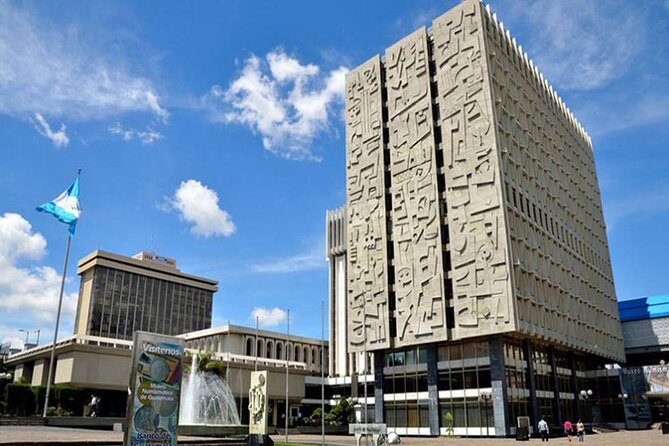
Then you head to Centro Civico, the Civic Center with major buildings constructed between the 1950s and 1960s. The itinerary specifically calls out government and civic institutions such as:
- Supreme Court of Justice
- Ministry of Public Finance
- City Hall
- Social Security
- Bank of Guatemala
- National Mortgage Bank
- Guatemalan Tourism Commission
This stop lasts about 30 minutes. It’s not about grabbing a souvenir; it’s about understanding the city’s layout and priorities. You’re seeing the “power map” of Guatemala City—where national institutions and civic functions cluster.
You might also notice how the city uses monumental architecture to project stability and permanence, especially compared with older Historic Center styles.
A few drive-by or short-walk moments: Lux Theater, Hotel Pan American site, and El Portalito
Between the larger checkpoints, the itinerary includes several well-known spots:
The Lux Theater
The Lux Theater is described as an emblematic stage in Guatemala from 1935 to 1960. It later became a cinema in the 1980s as theater interest declined. More recently, it was transformed into the Cultural Center of Spain’s new headquarters after a remodel.
Even with short time here, this stop helps you understand how the city reuses and reshapes important cultural spaces.
The Hotel Pan American site
You’ll also pass the site of the Hotel Pan American, originally called the Pension Amado built in 1914, later demolished by earthquakes in 1917 and 1918. It was renamed to honor Pan Am Airlines crews who often stayed there. By the early 1980s, it became a downtown meeting place where presidents, diplomats, government officials, and foreign visitors gathered.
This is a good stop for travelers who like history that’s tied to present-day streets. You’re watching a location’s identity shift over time.
Rubio Passage (El Portalito)
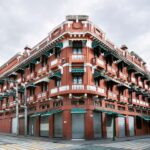
Finally, there’s Rubio Passage, also called El Portalito. The structure is inspired by commercial passages of Italy from the 17th century. If you like arcades and photo-friendly urban design, this is a quick but memorable interlude.
I like these interludes because they add texture. Big city tours can feel like a checklist; these stops help the city feel lived-in and layered.
Stop 6: Plaza de la Constitución and the Cathedral area
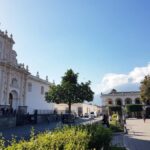
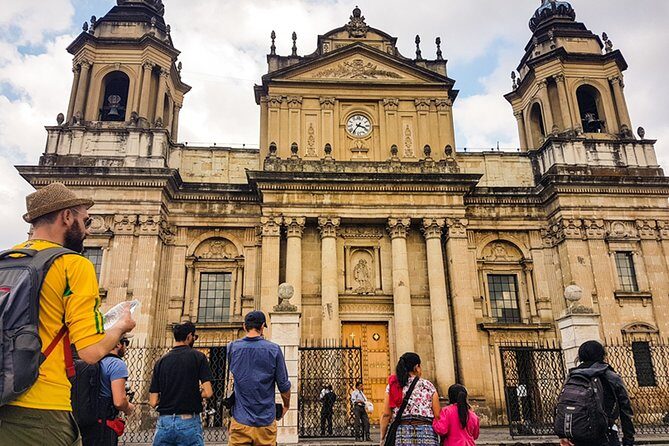
Now you hit the heart of it: Plaza de la Constitución, about 40 minutes at the Major Plaza in the Historic Center. This is where the tour becomes more walkable and more “stop and look.”
You’ll see major landmarks around the square, including:
- National Palace
- Metropolitan Cathedral
- Portal of Commerce
- Centenarian Park
This plaza is described as the heart of the Historic Center. Even if you’ve never been to Guatemala City before, it tends to feel like the center you can circle back to.
Why this stop is worth your attention
A city overview needs one “anchor” moment. Plaza de la Constitución is that moment. Once you understand the shape of the square and where the cathedral sits, later market shopping feels more connected instead of random.
Photo tip: try to take one wide shot of the whole plaza, then step to the side and take a closer photo of details. The contrast helps your photos tell a story instead of looking like generic landmark snapshots.
Stop 7: Mercado Central shopping behind the cathedral
Next is Central Market (Mercado Central). It’s located behind the Metropolitan Cathedral, in the basement of Tabernacle Plaza. The tour lists about 20 minutes for this stop, with the practical note that the market is divided into sectors.
Here’s what you might find:
- spices
- jade souvenirs
- assorted handicrafts
- general local goods to browse
Even at 20 minutes, Central Market can feel like sensory overload—in a good way. It’s not only shopping. It’s a way to see everyday Guatemala City commerce up close.
Shop smart in a short market stop
- Decide on one souvenir category first (spices, jade, or smaller crafts)
- Don’t try to see everything; instead, pick a few stalls and compare
- Ask your guide for what’s common and what’s worth attention in terms of quality
Some of the strongest reviews mention finishing at this market and genuinely enjoying browsing for the right items. That’s the kind of stop that can turn a “tour” into a memory.
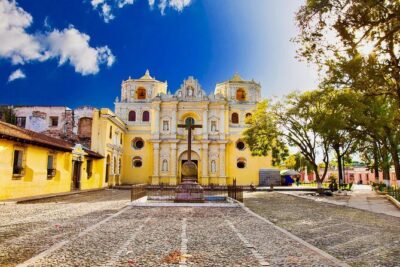
Stop 8: Iglesia Santo Domingo (Nuestra Señora del Rosario Basilica)
The final Historic Center stop is Iglesia Santo Domingo, also described as the Basilica of Nuestra Señora del Rosario. It’s a Catholic temple in a neoclassical seismic style located in the Historic Center.
The itinerary points to a specific devotion: Virgen del Rosario, described as queen of Guatemala City against earthquakes. The stop time is about 15 minutes, which means you’ll want to focus on what stands out visually and listen for the meaning behind the devotion.
This is a fitting close because you end the tour on spiritual and architectural symbolism, after spending time on government power and market life.
Getting the most out of the guide you get
This tour lives or dies on the guide. In the best experiences mentioned in reviews, guides like Juan Pablo, Adolfo, and Winston Cuk are described as friendly, clear in English, and quick to answer questions. That’s not a guarantee every day, but it tells you what to value.
If your Spanish is limited, this matters even more. The route includes many culturally specific details—church styles, historical site naming, and civic building purposes. When the guide can explain that clearly, you actually learn things you can use later, like what areas you’ll recognize if you go back on your own.
My practical advice: prepare one or two simple questions before you meet the group, such as:
- What area should I explore longer on my own later?
- What landmarks matter most for first-time photos?
That turns the guide from a narrator into a resource.
Comfort, transport, and what to bring for an afternoon run
Transport is handled by an air-conditioned coach, van, or minivan. Some reviews mention comfortable rides and tinted windows, which can help on drives. Still, you’ll be walking briefly at several stops, including the plaza and market area.
Bring:
- walking shoes
- a hat and sunglasses
- a camera (or phone)
Also, plan for changing light and sun exposure. Plaza and market time can shift fast from shadow to strong daylight.
Price and value: what $58 buys you (and what it doesn’t)
At $58 for around three hours, the value comes from bundled logistics:
- round-trip hotel transport
- a local guide
- air-conditioned vehicle time between key zones
Food and drinks aren’t included. That’s normal for a city tour of this length, but it does mean you should plan a quick snack or dinner after.
If you’re comparing this to doing it solo, the savings are less about money and more about time and clarity. You’re buying a shortcut to understanding where things are and what they mean.
Should you book this Guatemala City afternoon tour?
I’d book it if:
- you want an overview of Guatemala City in a tight time window
- you like Historic Center landmarks plus a market stop
- you want your afternoon planned with pickup and transport included
- you’ll appreciate context from guides (especially strong English explanations, based on past experiences)
I’d think twice if:
- you can’t risk a missed pickup (since a few reviews mention no-shows)
- you’re the type who needs long, slow museum-style time at each site (this tour is fast and efficient by design)
FAQ
FAQ
How long is the Guatemala City afternoon sightseeing tour?
The tour is approximately 3 hours.
Is hotel pickup and drop-off included?
Yes. Hotel pickup and drop-off are included (from selected hotels).
What major places do you visit during the tour?
You’ll see Avenida Las Américas, Avenida La Reforma, Iglesia Yurrita, Centro Cívico, Paseo de la Sexta area including the Lux Theater, the Hotel Pan American site, Rubio Passage (El Portalito), Plaza de la Constitución, Mercado Central, and Iglesia Santo Domingo (Basilica of Nuestra Señora del Rosario).
Do I need to pay for admission tickets?
The itinerary lists free admission tickets for the listed stops.
Is food included in the price?
No. Food and drinks are not included.
What is the tour price?
The price is $58.
Does the tour depend on good weather?
Yes. The experience requires good weather, and if it’s canceled due to poor weather, you’ll be offered a different date or a full refund.
Can you provide guides in other languages?
You can request other languages. The information states French, German, and Italian are available for private services, subject to additional costs and guide availability.