REVIEW · ANTIGUA GUATEMALA
1 Day Acatenango Volcano Hike from Antigua
Book on GetYourGuide →Operated by Old Town Outfitters · Bookable on GetYourGuide
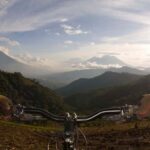
You feel the Andes change under your boots. This Acatenango volcano hike is famous for its microclimates: you’ll start in farm country, climb into cloud forest, and finish on a barren summit of scree. I like it most for the way the day keeps shifting—one hour you’re among crops, the next you’re in cool forest air—and for the time spent focusing on Volcán Fuego, erupting around 4 km away.
I also really like that you get a real viewpoint payoff. The summit includes a picnic break and 360° views across Guatemala’s highlands, with multiple volcanoes visible on clear days. The main drawback to know up front is that it’s not a casual stroll: you’ll face steep stretches, cold wind exposure near the top, and a hike that isn’t suitable for low fitness.
In This Review
- Key highlights worth planning for
- Why Acatenango feels like four hikes in one
- Early Antigua pickup and the ride to La Soledad
- Phase 1: cornfields and a steep warm-up
- Phase 2: cloud forest, wildlife sounds, and the quetzal zone
- Phase 3: conifer and dry forest to the stormy tree line
- Final push over scree to the summit picnic
- Watching Volcán Fuego erupt from about 4 km away
- Campsite stargazing and Fuego at night
- Descent through microclimates (and why the return isn’t boring)
- Gear, weather, and fitness: what will make or break the day
- Price and value for $170 per person
- Guide quality: when patience makes the climb easier
- Should you book the Acatenango hike from Antigua?
- FAQ
- How long is the Acatenango hike from Antigua?
- What time does the tour leave Antigua?
- What’s included in the price?
- What should I bring for the hike?
- Do I need a rain jacket?
- Is this hike suitable for kids or pregnant travelers?
- Are pets and large bags allowed?
Key highlights worth planning for
- Four microclimates on one climb: cornfields → cloud forest → conifer/dry forest → scree and high alpine conditions
- Cloud forest scenery and birdlife: a high-alpine cloud forest zone where the quetzal is known to live
- Summit picnic plus 360° panorama over Guatemala’s volcanoes and the Cuchumatanes range
- Volcán Fuego viewing from about 4 km away with a chance of dramatic eruption activity
- Alternate descent option for a change of scenery on the way back down
- Campsite stargazing tied to Fuego (your schedule can vary by date—confirm timing when you book)
Why Acatenango feels like four hikes in one
Acatenango is the kind of hike that punishes boredom. Instead of one long, repetitive slog, the trail changes several times as elevation and weather shift. That means you’re always earning the next stretch, because the environment around you is genuinely different.
You’ll walk through local farm fields at the start, then transition into old-growth cloud forest with cooler air and bird sounds. Later, the trail moves through temperate conifer and tropical dry forest zones before you reach stormy, exposed ground near the tree line. Finally, it turns into a scree trail dotted with dwarf pine trees and high alpine mosses—very different footing than earlier sections.
This is why the summit time matters. You’re not just hiking “up.” You’re collecting microclimates like stamps, then cashing them in for views and Fuego watching.
You can also read our reviews of more hiking tours in Antigua Guatemala
Early Antigua pickup and the ride to La Soledad
The day is built around an early start. The plan described is pickup from Antigua at 5:00am, with an about one-hour drive to the mountain village of La Soledad, perched on the Pacific side of Acatenango’s ridge.
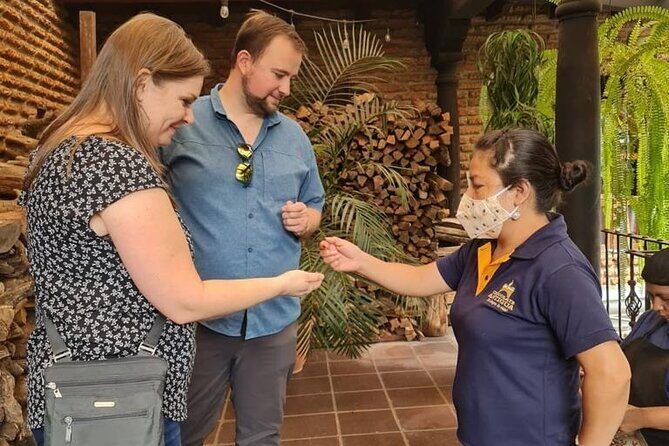
You’ll start your morning at Old Town Outfitters (address: 5a. Avenida Sur #12, Antigua). Their shop is open 8am–6pm, and it’s the place to grab essentials like snacks, clothing, or gear if you didn’t pack it already.
One timing note: you may see a specific meeting time listed as 9:00am for the meeting point at the shop, while the morning pickup is described as leaving at 5:00am. So do yourself a favor and confirm the exact pickup time for your date when you book. Either way, you’ll want your water sorted before the trail.
Phase 1: cornfields and a steep warm-up
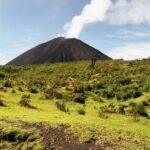
The hike begins with a steep trail through working farm fields. You’ll pass along the same route local villagers use each morning to access crops like corn, snow peas, and lilies.
The first hour has a practical purpose: it helps you acclimatize and warm up your legs. Even if you start feeling good, treat this section like your body’s rehearsal. You’re building stamina before the air cools and the trail gets more varied.
This part of the hike is also a nice mental reset. You’ll be walking in a landscape that feels lived-in rather than touristy—views of fields, rural structures, and a sense of normal daily life. It makes the rest of the ascent feel earned.
Tip: wear shoes that actually grip. The tour doesn’t include hiking boots, and it specifically notes no sandals. Scree later will not be gentle on flimsy footwear.
Phase 2: cloud forest, wildlife sounds, and the quetzal zone
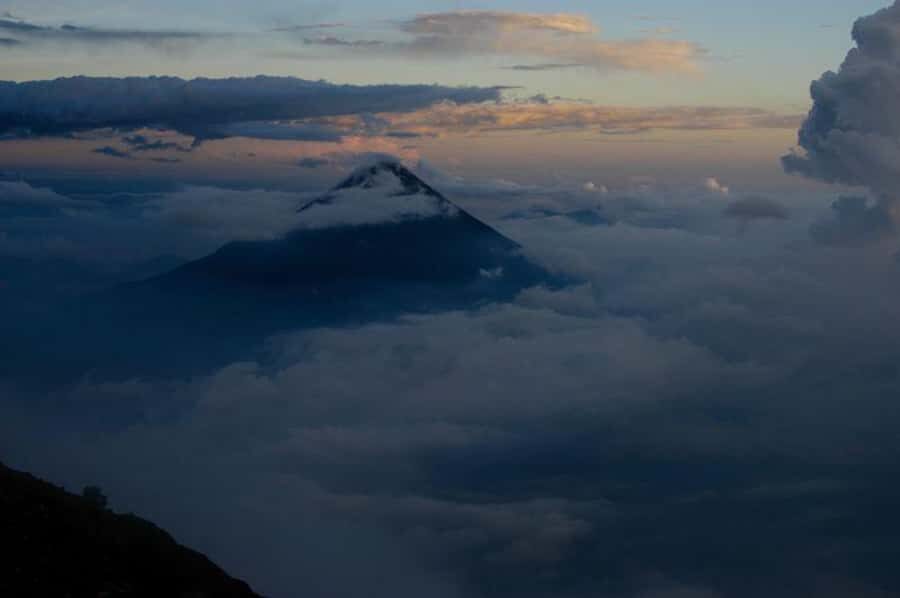
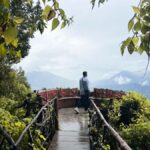
Next comes the climb into old-growth tropical cloud forest. This is the zone where the temperature drops and the atmosphere feels thicker—cooler mountain air, more shade, and plenty of birdlife.
This forest band is described as one where you can find some of Acatenango’s oldest trees and incredible biodiversity of flora and fauna. The quetzal is famously associated with cloud forest environments in Guatemala, and this zone is tied to its habitat.
You won’t climb straight through and ignore it, because this is where you start noticing details. Leaves look different here. Sounds change here. Even your pace tends to slow, because the air feels different on your skin and you’ll want to look up.
If you like photography, this is the easiest section to justify taking out your camera—just remember the day is wind-and-light dependent, so keep an eye on changing conditions.
Phase 3: conifer and dry forest to the stormy tree line
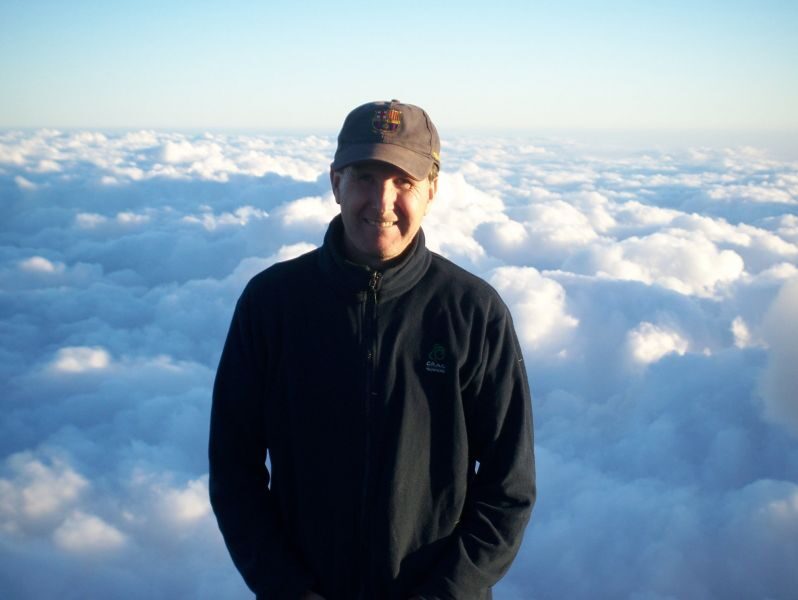
After cloud forest, the trail transitions into temperate coniferous forest and tropical dry forest. This mix is one reason Acatenango feels like a sampler platter of Guatemala’s climates rather than a single biome.
As you climb, you’ll reach the storm-beaten tree line. The description here is clear: exposed rocky surfaces remain from gusty, cold winds that pass over the peak. That’s a useful warning. Even if you start the day sunny, expect colder wind near the top.
This section also tends to be where people realize they need a second layer. The tour’s packing list includes a warm layer and/or windbreaker, and it suggests a rain jacket during May through October. Pack for wind. On a volcano summit, wind is the real weather.
A few more Antigua Guatemala tours and experiences worth a look
Final push over scree to the summit picnic
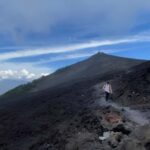
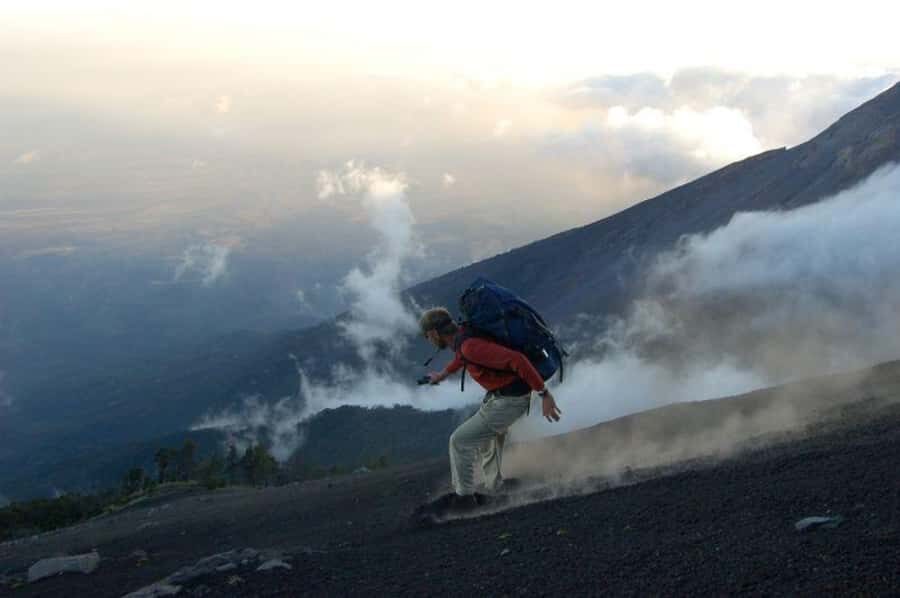
The last climb moves onto sand and gravel scree, with dwarf pine trees and high alpine mosses as dots along the route. Scree changes your footwork instantly. Each step can slide a little, which makes balance and steady pacing more important than speed.
As you approach the summit, you’re dealing with exposed, rocky surfaces and cold winds. This is where your hat and sunscreen matter too. Yes, it can be cool and still burn you—altitude and open skies are good at that.
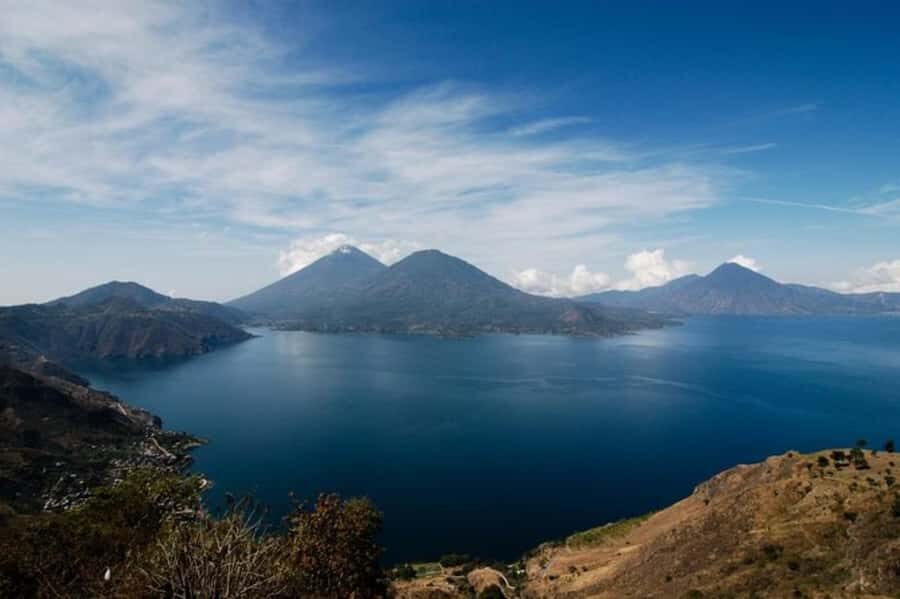
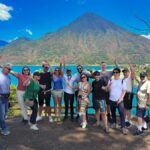
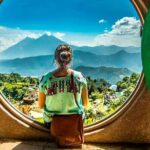
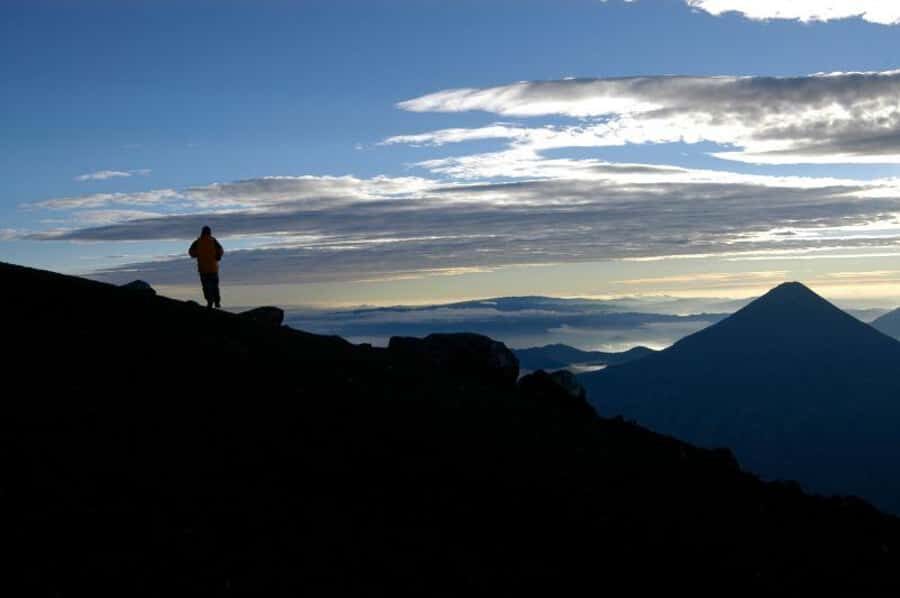
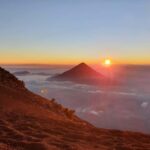
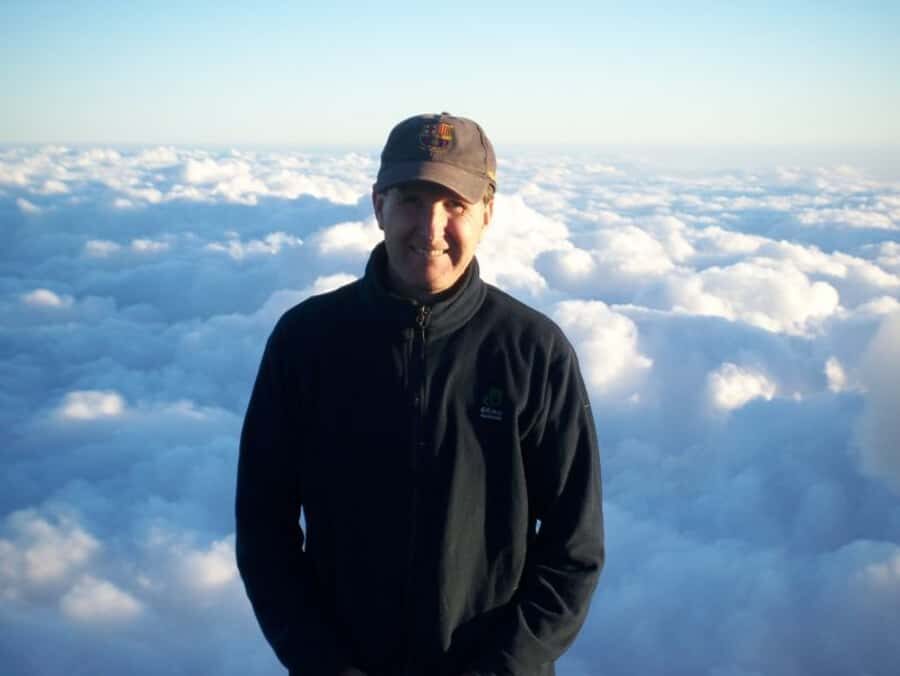
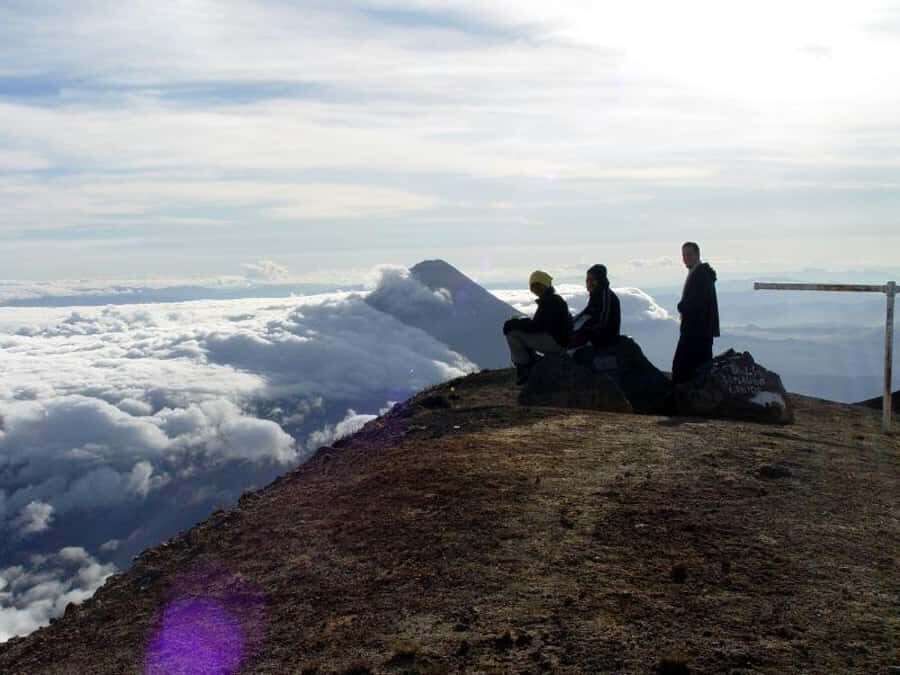
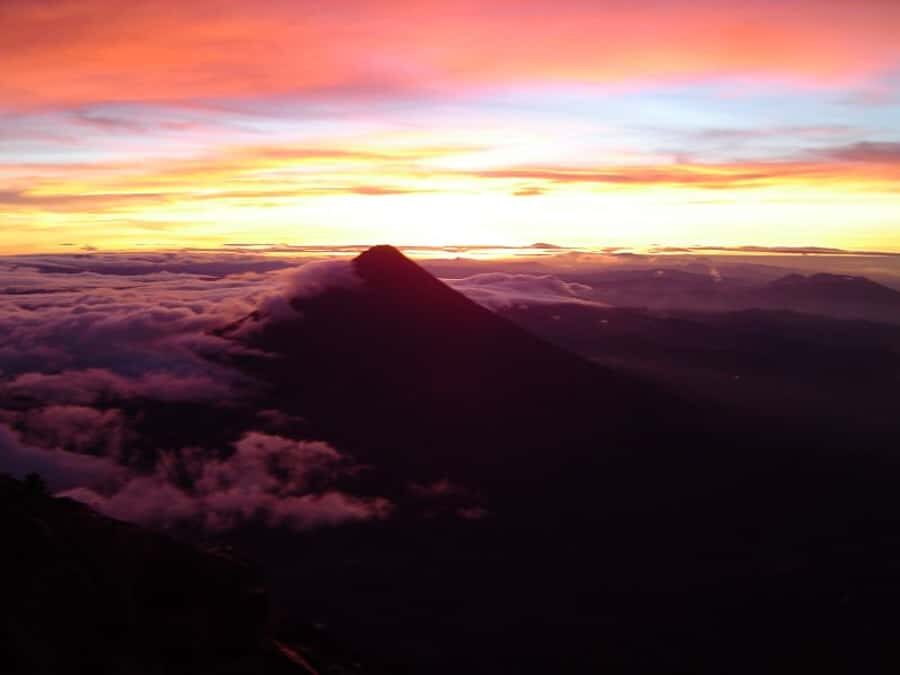
At the summit, your guide prepares a fresh picnic lunch. This isn’t just food. This is where you pause, rest your legs, and take in what you climbed for. The views are described as 360° over the highlands, and on clear days you can spot other major volcanoes including Atitlán, Tolimán, San Pedro, Santa María, Santo Tomás, and Tajamulco, plus glimpses of the Cuchumatanes Mountain chain.
The big decision on the summit is timing. You’ll spend 30 minutes to 1 hour at the top depending on conditions and schedule considerations. If weather is good and visibility is wide, that time is when you should slow down and really look.
Watching Volcán Fuego erupt from about 4 km away
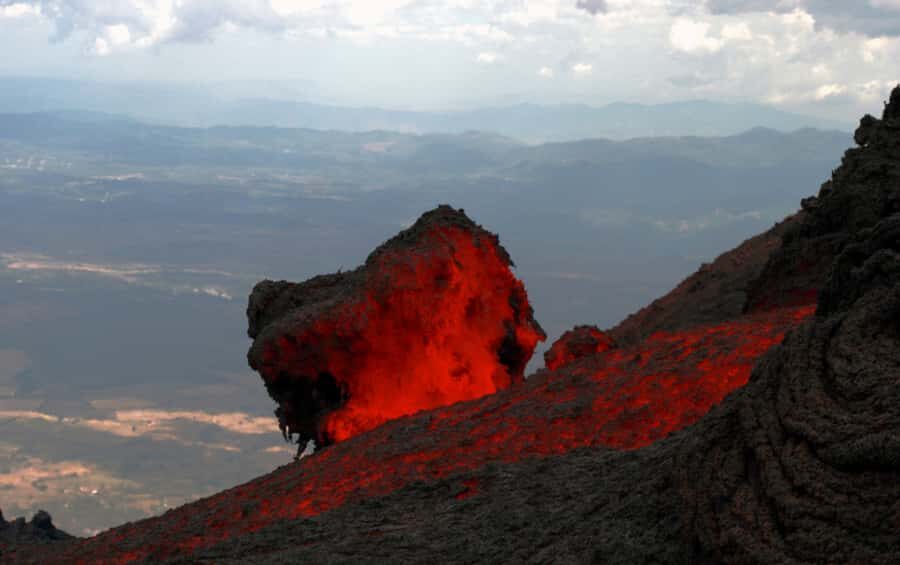
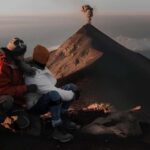
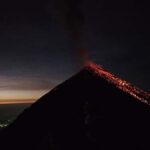
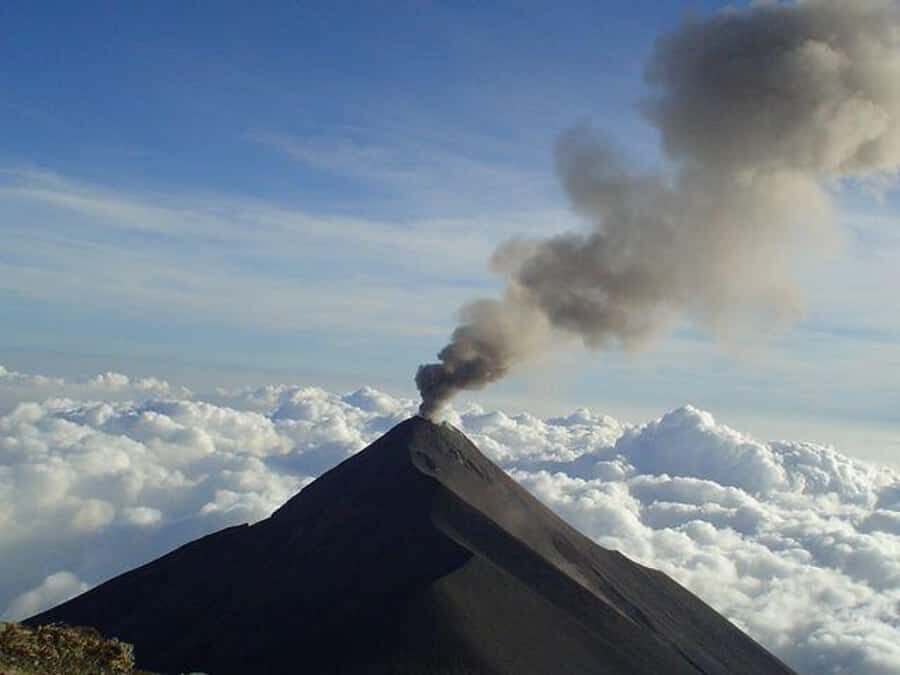
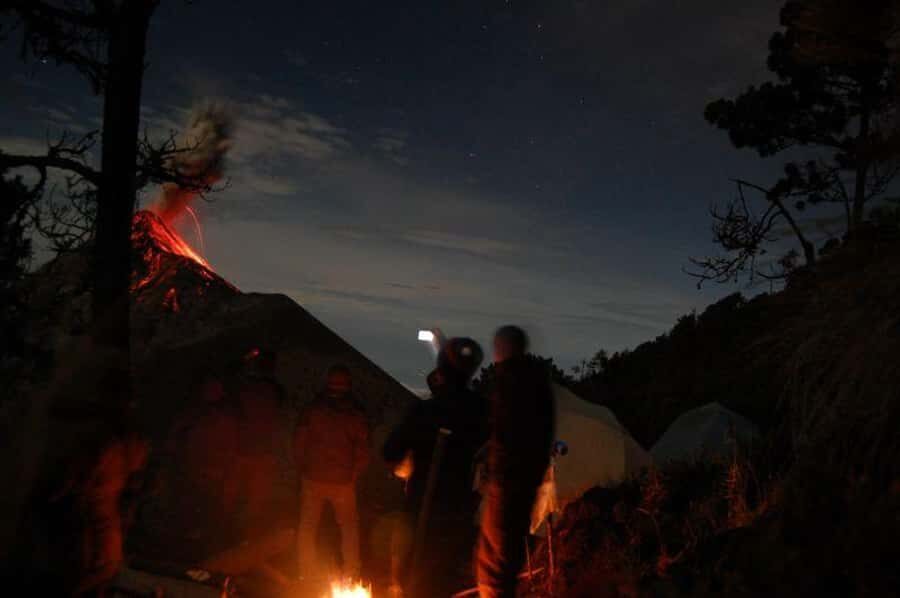
The summit is also where the day earns its dramatic reputation. You’ll focus your attention on nearby Volcán Fuego, described as active and about 4 km away.
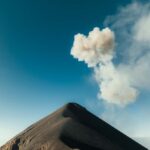
With a bit of luck, Fuego can put on a high-altitude fireworks show—violent explosions of gas, rock, and lava. That doesn’t mean you’ll always see fireworks. It does mean you’re going to build the time in your day around watching for them.
Even when the explosions are less flashy, watching an active volcano from a relatively close distance changes your perspective. The landscape isn’t just scenery anymore; it’s behavior.
If you’re the kind of person who loves real-time nature drama, this portion is why the hike is worth it. If you’re expecting guaranteed fireworks every minute, manage expectations and plan to enjoy the waiting process too.
Campsite stargazing and Fuego at night
One element highlighted in the experience is spending time at a campsite under the stars with a view of active Volcán Fuego. That’s the kind of add-on that turns a classic summit day into something more “Guatemala” and less “check-the-box.”
At the same time, the overall duration is listed as 1 day, and the described schedule includes a descent and return to Antigua in the afternoon. So the exact timing of any campsite night can vary based on conditions and how the operator structures your date.
My advice: ask your guide or the booking team what your specific day timeline looks like for your date. If star time and a campsite are included, you’ll want to dress for cold night air and bring whatever small comfort items you can manage.
Descent through microclimates (and why the return isn’t boring)
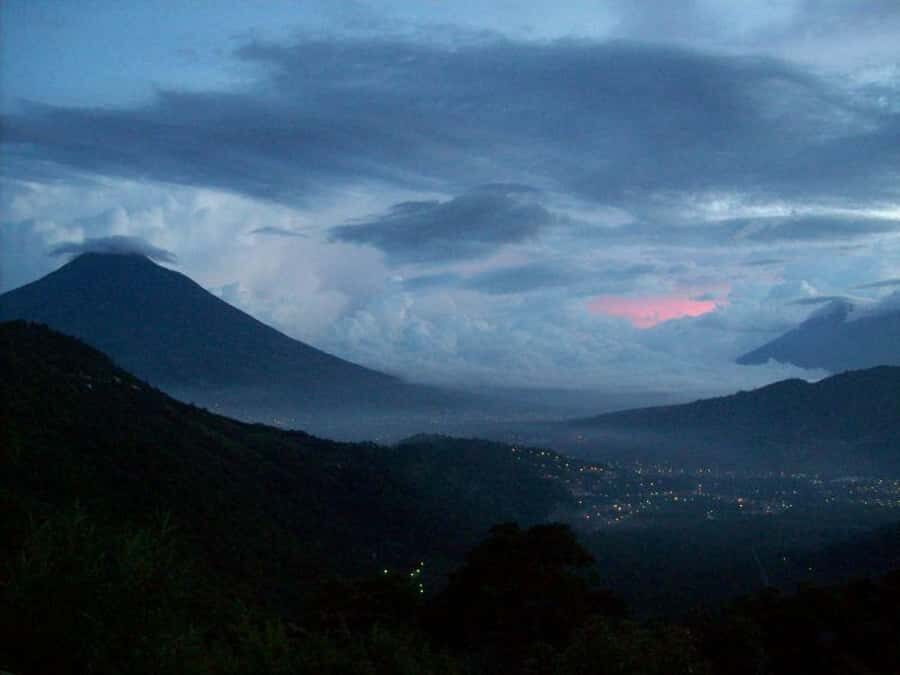
You’ll begin the descent after summit time. The description is roughly 3 hours down toward La Soledad.
There’s also an option to descend via an alternate route. That matters more than it sounds. Going back by the same trail can feel like punishment. A different descent route lets you experience more microclimates and trail variety, which keeps the day from turning into leg-dragging monotony.
This is where trekking skill helps. Scree downhill can be rough on knees if you rush. Take smaller steps, keep your balance, and think controlled, not fast.
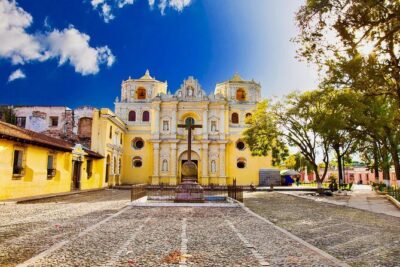
By the time you reach La Soledad, you’ll take transport back to Antigua and arrive in the afternoon with time to enjoy the colonial city life.
Gear, weather, and fitness: what will make or break the day
This is where you should be honest with yourself before you book. The tour isn’t suitable for children under 16, pregnant women, or people with low level of fitness.
The trail includes:
- steep farm-field climbing early
- cloud forest walking (often cooler and slower)
- windy, exposed summit conditions
- scree/gravel sections with slippery footing
So if you struggle with long uphill walks, or if you have knee issues, don’t treat this as a casual challenge.
What to bring is very practical:
- Comfortable hiking boots or trekking shoes (no sandals)
- Daypack with rain cover
- One warm layer and/or windbreaker
- Rain jacket for May through October
- Sun hat, sunglasses, and sunscreen
- A minimum of two liters of water
- A flashlight (recommended as part of the day’s preparedness list)
- Personal toiletries/medications if needed
Also, eat breakfast before you go and pack a small snack for the road. The tour includes mountain food, but you’ll still be moving early and you’ll appreciate something small to keep your energy steady.
Price and value for $170 per person
The price listed is $170 per person, and I think it can be good value if you care about three things: guide quality, food, and not having to micromanage logistics.
Included in the experience:
- Round-trip transportation from Antigua
- Park entrance fees plus a local guide from the community of La Soledad
- Picnic lunch/dinner prepared on the mountain
- A full tour of Acatenango with a bilingual guide and certified 1st-aid training
Gear isn’t included, so your personal costs might rise if you need boots, a rain cover, or an extra layer.
One review note to keep in mind: food is described as fair for the price. So yes, it’s taken care of, but don’t expect a gourmet feast. Expect hearty mountain meals and fuel for hiking.
If you show up with proper shoes, don’t skip layers, and use the guide time wisely, the hike feels like a solid deal for a big-mountain day with real volcano viewing.
Guide quality: when patience makes the climb easier
Good guides make climbs safer and more enjoyable. In the feedback provided, names like Gerson and Andrés come up as standout guides, both praised for being patient and excellent.
You’ll also get a bilingual setup (English/Spanish), plus local knowledge from the La Soledad community guide. That combination matters when you’re moving through multiple microclimates and dealing with changing wind and visibility.
And because the guide is listed as having certified 1st-aid training, you get a basic layer of safety planning beyond just “we’ll go slow and hope.”
If you can, ask what kind of guide you’ll have. If you hear Gerson or Andrés are available, that’s a sign you’ll likely get a smoother experience.
Should you book the Acatenango hike from Antigua?
Book it if you want a volcano day that’s more than a single viewpoint. You’re getting four distinct trail environments, a summit picnic with a 360° panorama, and dedicated time staring at Volcán Fuego from roughly 4 km away. If you like nature that changes quickly and you can handle cold wind near the top, this is a strong match.
Skip or rethink it if you’re low on fitness, dealing with knee trouble, or not comfortable with steep uphill work plus scree footing. This isn’t built for gentle walkers, and it also isn’t suitable for children under 16 or for pregnant travelers, based on the tour’s limits.
Finally, do a quick checklist before you go: shoes with grip, layers for wind, sunscreen for altitude, and enough water. If you show up prepared, this hike turns into a memorable Guatemala day—part forest, part summit, part volcano show.
FAQ
How long is the Acatenango hike from Antigua?
It’s listed as a 1-day activity. Starting times can vary, so you’ll want to check availability for the exact departure time on your date.
What time does the tour leave Antigua?
The experience description says the group leaves the Antigua office at 5:00am, but you should confirm the exact meeting/pickup time for your date. The tour’s meeting point is at Old Town Outfitters on 5a. Avenida Sur #12.
What’s included in the price?
Round-trip transportation from Antigua, park entrance fees, a local guide from La Soledad, and a bilingual guide with certified 1st-aid training. You also get freshly prepared mountain picnic lunch/dinner.
What should I bring for the hike?
Comfortable trekking shoes (no sandals), a daypack with rain cover, a warm layer/windbreaker, sunscreen, sunglasses, and a sun hat. You should also bring at least two liters of water and a flashlight.
Do I need a rain jacket?
The information specifically notes a rain jacket for May through October, and a daypack rain cover is part of the recommended gear.
Is this hike suitable for kids or pregnant travelers?
No. It’s not suitable for children under 16 and not suitable for pregnant women.
Are pets and large bags allowed?
Pets are not allowed, and luggage or large bags are not allowed.