REVIEW · ANTIGUA
Walk Antigua Like a Local
Book on Viator →Operated by Columbus Guatemala Travel S.A. · Bookable on Viator
Antigua is best learned by foot. This small-group walk stitches together major sights fast, with a local guide’s context along the way. I especially like how you hit landmarks people photograph daily—then you learn the why behind them. I also like that the pace stays practical, including bottled water and an artisanal beer tasting.
The big plus is the hands-on guidance. You’ll stop at places like Plaza Central, Iglesia de San Francisco El Grande, and Casa Santo Domingo, plus more of Antigua’s signature spots. One thing to plan for: this is a lot of walking in about half a day, and lunch isn’t included.
In This Review
- Key Things That Make This Walk Antigua Like a Local
- A 3–4 Hour Walk That Gets You Oriented Fast
- Where You Start (And Why It Matters)
- Plaza Central Park: Your Antigua Orientation Point
- Iglesia de San Francisco El Grande: Restoration, Earthquakes, and a Special Tomb
- Casa Santo Domingo Museums: From Convent Scale to Museum Calm
- La Iglesia de la Merced: Low Bell Towers With Earthquake Logic
- Santa Catalina Arch: A Photo Spot With a Real Purpose
- Chocolate Museum: Cacao in Guatemala, Plus Real Tastings
- Jade Stop: Ancient Use, Symbolism, and Guatemala’s Claim to Jadeite
- The Artisanal Beer Tasting (And How It Fits the Day)
- Why a Local Guide Changes Everything
- Price and Value: What $32 Covers
- Who This Tour Fits Best
- Should You Book Walk Antigua Like a Local?
- FAQ
- How long is the tour?
- How much does it cost?
- Where do we meet, and when does it start?
- What’s included in the price?
- Is lunch included?
- Is there any stop where admission is not included?
- Is the group small?
- Does weather affect the tour?
Key Things That Make This Walk Antigua Like a Local
- Small group (max 15) so questions don’t get lost
- Plaza Central Park as your orientation point for day or night energy
- San Francisco El Grande and the tomb of Pedro de San José de Betancur
- Casa Santo Domingo where convent history meets museum-style exploring
- Cacao at the Chocolate Museum with tastings of local flavors
- Jade context and Guatemala’s role in jadeite deposits
A 3–4 Hour Walk That Gets You Oriented Fast
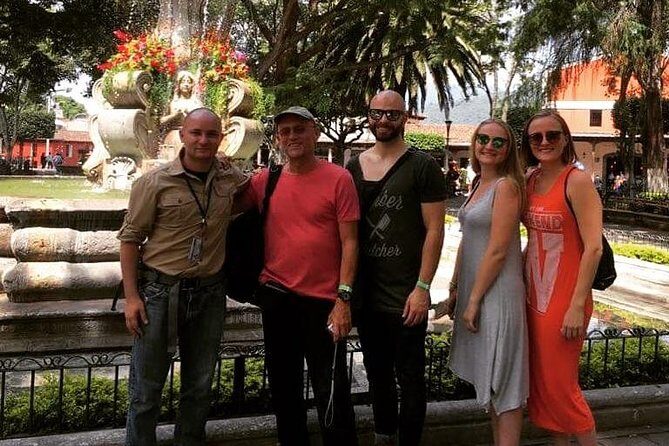
If Antigua is your first stop in Guatemala, this kind of tour makes your next days easier. In a few hours you get a sensible route through the most important corners of town, so you’re not wandering with just a map and hope. The tour is priced at $32 per person, which is a fair match for the time and the included extras like water and beer tasting.
I like that the format is built for real sightseeing, not rushing past doors. You get guide-led explanations at each stop, and the walk keeps you moving while still giving you time to actually look.
Just go in with the right expectation: you’ll be on your feet for most of the morning. Wear good walking shoes, and you’ll feel like you chose wisely. Skip that, and your legs will remind you you chose the wrong laces.
You can also read our reviews of more walking tours in Antigua

Where You Start (And Why It Matters)
The meeting point is Casa de la Mandarina, 2a Calle Poniente 2, Antigua Guatemala. Starting at 9:00 am is smart. Early walking means cooler air and less crush at the most popular spots.
This is also one of those tours where starting together helps a lot. Antigua’s streets can feel confusing at first, and a guided route makes navigation feel effortless. The tour ends back at the same place, so you’re not stranded across town when you’re tired.
Group size is capped at 15 travelers, which tends to make the pace feel human. If you’ve ever been stuck behind a big group of camera towers, you’ll appreciate this setup.
Plaza Central Park: Your Antigua Orientation Point
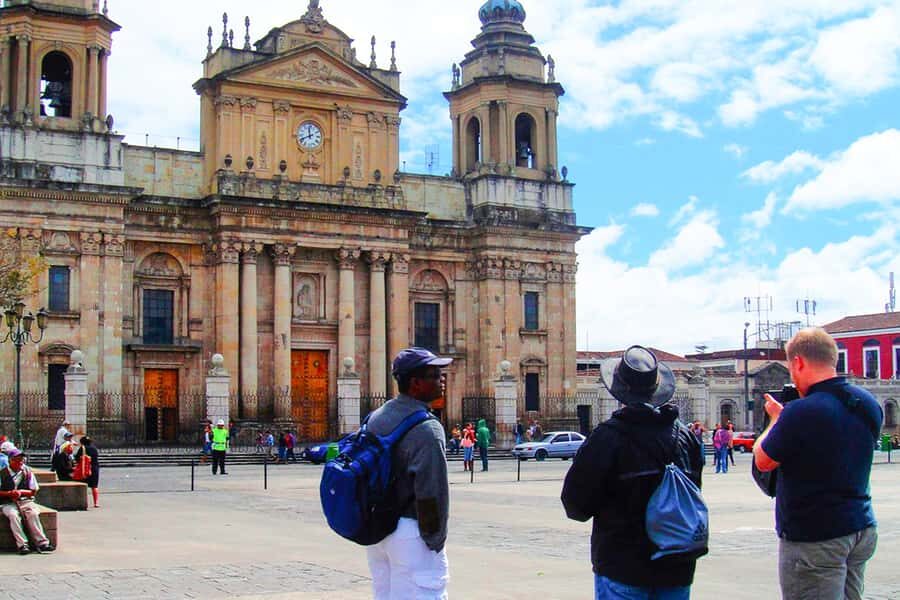
Your first stop is Plaza Central Park, the heart of Antigua. This is the town square people use as a reference point in daily life. During colonial Spanish times it served as the key meeting place and reference point, and that role is still alive today.
What I like here is that you don’t just see pretty buildings—you understand why this spot matters. The Municipal building, the Palace, major religious buildings, and the Cathedral ring the square. Even if you don’t study every façade, the layout makes it clear how Antigua is organized.
This is also prime people-watching. You’ll see vendors and plenty of activity running through the day. On weekends, the square livens up even more, so if your schedule matches a weekend morning, expect extra motion.
You’ll get about 20 minutes at this stop, and admission is free. Use this time to grab a coffee or juice if you want, then you’re ready to go deeper.
Iglesia de San Francisco El Grande: Restoration, Earthquakes, and a Special Tomb
Next is Iglesia de San Francisco El Grande. This church has been damaged by earthquakes, including major events in 1874 and 1917. After that, it was rebuilt in the second half of the twentieth century when the Guatemalan state allowed regular religious orders to hold property again.
This is one of those stops where a guide really earns their fee. You’re not only seeing a restored church; you’re seeing a story of how Antigua adapted to repeated shaking. The restoration process was described as controversial because of the focus on rebuilding structurally healthy portions of the church.
The stop is also a dedicated moment for the tomb of Pedro de San José de Betancur, the only Saint of Guatemala. If you want a quick, meaningful reason this church matters beyond architecture, this is it.
You’ll spend around 25 minutes here. Admission for this specific church is not included, so plan a little extra if you want to go inside. If you’re trying to keep your budget tight, this is the one place where you should expect a ticket.
Casa Santo Domingo Museums: From Convent Scale to Museum Calm
Then you’ll head to Casa Santo Domingo Museums. Long before this was a museum setting, it was tied to the Convent of Santo Domingo, described as one of the largest in America during the seventeenth century.
The convent suffered near-total destruction after the Santa Marta earthquake in 1773. What stands today came through a long process of rebuilding and repurposing. You’ll see how the space transformed into Hotel Museo Spa Casa Santo Domingo, where the walls hold layered chapters of Antigua’s past.
This stop works well because it blends visual “wow” with calm pacing. You’re not just chasing the next photo spot—you’re looking at how a major institution in colonial life evolved into something you can experience now.
Admission here is free, and you’ll get about 20 minutes. It’s a good pause from the heavier church stops and a nice way to understand Antigua as a living place, not just a set of ruins.

La Iglesia de la Merced: Low Bell Towers With Earthquake Logic
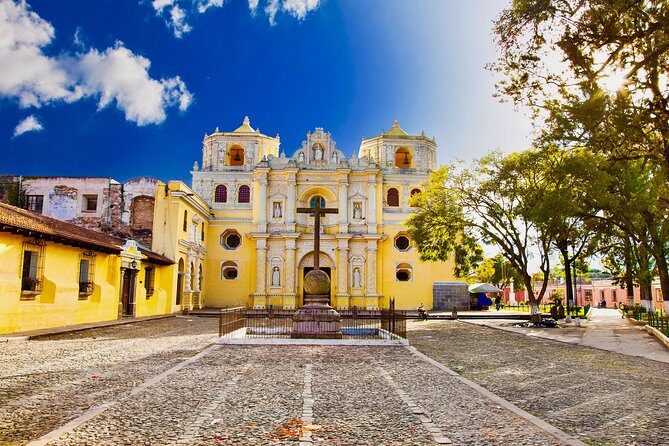
One of Antigua’s most striking architectural features shows up at La Iglesia de la Merced, a historic Catholic church in the center of town. It’s known for Baroque architecture, but the standout detail is the unusually low height of its two bell towers.
That design choice wasn’t random. The low towers were intended to withstand the frequent earthquakes that affect the region. This is architecture that admits reality. It’s a practical response turned into an aesthetic trait, and that’s the kind of detail a guide helps you notice.
If you’re into “why does that look like that” moments, this church is one of the best. You’ll also get a stronger appreciation for Antigua’s look once you realize how often the city has had to rebuild.
Santa Catalina Arch: A Photo Spot With a Real Purpose
Next up is the Santa Catalina Arch, one of Antigua’s iconic landmarks. It was built in the 17th century to connect the Santa Catalina Convent to a school. The idea was simple: cloistered nuns could pass between buildings without going outside.
So yes, it’s photogenic—bright yellow and dramatic—but it’s also meaningful. This is one of those structures where the function helps you read the scene.
On clear days, you may also get the Volcán de Agua backdrop. If the sky is cooperating, this can be an extra memorable moment because the volcano isn’t just “out there.” It becomes part of the composition and the story of Antigua’s geography.
Chocolate Museum: Cacao in Guatemala, Plus Real Tastings
After the big churches and arches, the route shifts into something more sensory. At the Chocolate Museum, you’ll learn about the history of cacao and the cacao tree and why cacao matters in Guatemala.
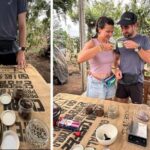
The museum also links cacao to how people experience it today. Choco Museo has its own artisanal chocolate factory that makes chocolate from organic Guatemalan cacao beans. You’ll have the chance to sample different chocolates, ranging from pure dark chocolate to blends with flavors like cardamom, cinnamon, and coffee.
This stop is valuable even if you’re not a big “food tour” person. It gives you a different lens on Antigua: not only colonial churches, but also everyday cultural ingredients and local production.
If you like learning with your taste buds, you’ll enjoy this part a lot. If you don’t, it’s still a smart break from walking and a chance to reset.
Jade Stop: Ancient Use, Symbolism, and Guatemala’s Claim to Jadeite
Another stop covers jade—and it’s not just a shiny souvenir moment. Jade has been used for over 5,000 years in both China and Mesoamerica, making objects ranging from ornaments and utensils to tools and weapons. In some places it carried meanings tied to protection and symbolism.
The tour framing is about more than romance. Jade is known for its hardness and resistance, which is why it became valuable for both practical and decorative uses. You’ll also learn about the symbolism people associate with jade, including ideas of luck and hope, plus how it’s seen as a stone of eternal life and abundance.
Guatemala gets a special mention here: it’s described as one of only four countries with deposits of jadeite jade. Even if you don’t buy anything, the context helps you understand why jade shows up in so many crafts and why this isn’t just a random stop.
The Artisanal Beer Tasting (And How It Fits the Day)
Your tour includes bottled water and an artisanal beer tasting (with taxes). This is one of those details that makes the tour feel thoughtfully packaged.
After hours of walking, it’s a relief to have a planned moment where you can sit, taste, and talk without hunting for a place yourself. The key is to pace it. Drink slowly, enjoy it, and don’t plan to overdo it if you still want energy for later in Antigua.
Why a Local Guide Changes Everything
Every person who does Antigua without a guide eventually hits the same problem: you see a lot, but you miss the connections. A guide helps you join the dots.
In real-life examples from this tour’s guide lineup, I’ve seen that locals like Roberto, Tony, Felix, Estevan, Carlos, and Manuel Barrios focus on practical details and flexible storytelling. That flexibility matters. One person wants architecture. Another wants food tips. When the guide adjusts, the whole morning feels smoother.
There are also practical tips that show up in guides’ Q&A style moments, like help with ATMs and where to eat. Those are the small things that save time and stress—especially on your first day in Guatemala.
If you want to understand Antigua quickly, this is the big value.
Price and Value: What $32 Covers
At $32, you’re paying for a structured morning with multiple stops and an included set of extras. The tour includes all fees and taxes, bottled water, and the beer tasting. Lunch is not included, and that’s the one budget item you should plan for.
Think of it like this: you’re not just paying for walking. You’re paying for the route, time efficiency, and the guide’s ability to explain what you’re looking at. If you tried to DIY these stops on your own, you’d likely still spend money on entrances, plus you’d spend extra time figuring out what’s worth seeing and how the pieces connect.
The one caution is ticket variability. San Francisco El Grande specifically notes that its admission is not included. Also, some stops like the square and Casa Santo Domingo are free, so your tour cost is spread across the morning in a way that keeps things balanced.
Who This Tour Fits Best
This tour is a strong match if you:
- want a first-day orientation to Antigua
- like history that comes with street-level context
- enjoy mixing architecture with food and drink stops (cacao and beer)
- prefer small groups where you can ask questions
It’s also a good choice if you don’t want to spend hours comparing maps. This route gives you a logical arc through the city.
If you hate walking, or if you want a slow, long “sit and soak” style itinerary, you might find the pacing too active. But if you’re okay with being on your feet for a half day, you’ll get a lot.
Should You Book Walk Antigua Like a Local?
I’d book it if you want Antigua to make sense quickly. This is a smart way to learn the city’s layout, see the main landmarks, and understand why they look the way they do—especially with stops like San Francisco El Grande and La Merced, where the earthquake story is part of the architecture. The cacao and jade stops also keep the tour from feeling like church-only sightseeing, and the included water plus beer tasting make it feel like more than just a walking lecture.
I’d hesitate only if you’re very sensitive to walking time, or if you’re counting every penny and don’t want to pay any extra admissions at all (since San Francisco El Grande’s ticket is not included). If those points are okay, this tour is a solid value and a fun way to start your Antigua days feeling confident.
FAQ
How long is the tour?
It runs about 3 to 4 hours.
How much does it cost?
The price is $32.00 per person.
Where do we meet, and when does it start?
You meet at Casa de la Mandarina, 2a Calle Poniente 2, Antigua Guatemala at 9:00 am. The tour ends back at the meeting point.
What’s included in the price?
The tour includes all fees and taxes, bottled water, and an artisanal beer tasting (plus taxes).
Is lunch included?
No. Lunch is not included.
Is there any stop where admission is not included?
Yes. Iglesia de San Francisco El Grande has admission listed as not included.
Is the group small?
Yes. The tour has a maximum of 15 travelers.
Does weather affect the tour?
It requires good weather. If it’s canceled due to poor weather, you’ll be offered a different date or a full refund.