REVIEW · GUATEMALA CITY
Guatemala city Walking Tour and public bus
Book on Viator →Operated by GTM Tour Guide and Travel Services · Bookable on Viator
Two hours, and Guatemala City makes sense fast. This Zone 1 walking tour is interesting because it mixes landmark architecture with a real public bus ride, so you see the official face of the city and the everyday routes people use. I especially like the public bus fare included value, plus the way the route strings together big sights without making you hunt for connections. One drawback to consider: the pace can feel a bit slow if you’re hoping to sprint through everything, and most stops are more about viewpoints and exteriors since admission tickets are not included.
I also like that the tour runs with a small group (max 15), which keeps questions flowing instead of turning into a lecture. Guides I met here in the reviews, like Armando and Fidencio, come across as friendly and strong with English, and they can explain how Guatemala City’s government, architecture, and history fit together. If you dislike heat, plan smart: you’ll be walking outdoors for a good chunk of the morning.
In This Review
- Quick hits before you go
- Why this Guatemala City walk + bus route feels practical
- Price and value: why $30 makes more sense than you’d expect
- Your 10:30 start: timing, pace, and weather reality
- Stop 1: Estación Centro Cívico and the government core
- Stop 2: Diario de Centro América and the story behind the typography building
- Stop 3 and 4: El Calvario (Nuestra Señora de los Remedios) and San Francisco
- Stop 5: Palacio de Comunicaciones and how the state built modern links
- Stop 6: Casa Ibargüen and the old Beltranena palace (1778)
- Stop 7: Plaza de la Constitución, independence energy, and kilometer zero
- Stop 8: Metropolitan Cathedral of Santiago de Guatemala
- Stop 9: Mercado Central and why it exists
- Stop 10: San Martín in the old Pavón House, then you’re free
- The guide factor: strong English and real city context
- Who this tour suits best (and who might not love it)
- My practical checklist for a smooth morning
- Should you book Guatemala City Walking Tour and public bus?
- FAQ
- How much does the Guatemala City walking tour cost?
- How long is the tour?
- What time does the tour start?
- What’s included in the $30 price?
- Are admission tickets included for the stops?
- What are the start and end points?
- How many people are on the tour?
Quick hits before you go
- Public bus fare included so you travel like a local, not like a tourist on a private van
- Zone 1 in one half-day with government buildings, churches, cathedral, and a major market
- Small group, max 15 for a calmer pace and real back-and-forth questions
- Ends at Plaza de la Constitución where you can keep exploring on your own
- A practical finish near San Martín and Paseo de la Sexta for an easy last stop for coffee or snacks
Why this Guatemala City walk + bus route feels practical
Guatemala City can feel chaotic if you arrive with no plan, but this tour gives you a clean structure. You start at the Westin Camino Real area on Avenida La Reforma, then work through the Historic Center zone where many key buildings sit close together. The ending at Plaza de la Constitución is especially helpful because it’s a natural hub for self-guided wandering or heading back to your hotel.
What I like most is the balance: you’re walking enough to notice details, but the public bus component prevents the day from becoming a nonstop hike. It’s also a smart way to “read” the city. You’ll see how official institutions and old neighborhoods line up with the streets people actually use.
You can also read our reviews of more walking tours in Guatemala City
Price and value: why $30 makes more sense than you’d expect
At $30 per person for about 2 to 2.5 hours, the real value isn’t just the guide. It’s that the tour includes public transportation, which is a concrete cost you avoid. Many city tours sell you a bundle of walking and storytelling, then hit you with extras for transit. Here, you can spend your money where it counts for you: water, snacks, or whatever you want to buy at the market.
Two things to keep straight. Admission tickets are not included for the listed stops, so don’t plan your schedule around any paid interior time. Coffee and lunch also aren’t included, but you’ll have a strong chance to eat locally at the market area later in the route.
Your 10:30 start: timing, pace, and weather reality
The tour starts at 10:30 am and usually runs 2 hours to 2 hours 30 minutes. That timing matters because Central America heat tends to creep upward as you go, and you’ll be outdoors more than you might expect from a “short” walk.
The experience requires good weather, so if conditions are poor, you’ll be offered a different date or a full refund. Even in good weather, bring the basics like you mean it. One helpful tip from the trip stories here: pack a hat, sunscreen, and water. You’ll thank yourself midway through.
As for pace, you need to match your expectations. If your goal is maximum speed, the route might feel a little slow. If your goal is to learn why things look the way they do while you still get enough time to browse, the pace works.
Stop 1: Estación Centro Cívico and the government core
You kick off at Estación Centro Cívico, which puts you right in the thick of Guatemala City’s official institutions. This area is a cluster of major buildings you’ll recognize by their roles, including City Hall and key financial and social offices like Banco de Guatemala and Banco Credito Hipotecario Nacional, plus the Social Security Offices.
This stop is less about one single monument and more about context. Standing here helps you see the city’s “power geography,” where bureaucracy and public life intersect. You get a quick orientation for everything that comes next in the Historic Center.
Plan for about 15 minutes here, and remember there’s no admission included. That’s fine because the point is to look, absorb the setting, and move on.
Stop 2: Diario de Centro América and the story behind the typography building
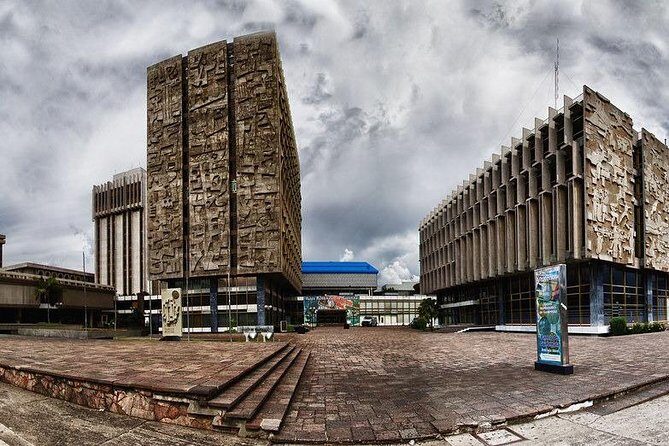
Next you head to the Dirección General del Diario de Centro América y Tipografía Nacional area. The tour explains that the National Typography building originally occupied a different site from 1894 to 1918, tied to what was called Hospital Street and specific intersections in the historic grid. Then, in 1935, President Jorge Ubico pushed a new construction project to continue operations.
Why should you care? Printing and type are a quiet engine of national identity. When the government invests in places for a national newspaper and typography, it’s also investing in communication and legitimacy.
You’ll have about 20 minutes at this stop. Again, admission isn’t included, so focus on what’s outside and what the guide connects it to in the city’s timeline.
You can also read our reviews of more city tours in Guatemala City



Stop 3 and 4: El Calvario (Nuestra Señora de los Remedios) and San Francisco
After the communications-and-government stop, the route turns toward Catholic landmarks and the way buildings get reused over time.
At Parroquia Rectoral Nuestra Señora de los Remedios (El Calvario), you’ll learn a wild transformation story. The church was originally positioned on top of Cerro del Cielito near the end of the sixth avenue of the Historic Center. In 1936, it became the National Museum of History. Later, it was demolished to expand a main road.
That kind of repurposing can be hard to “see” unless someone frames it for you. This stop helps you understand how the city changes its mind, and how development can erase old sacred spaces.
You’ll get about 10 minutes here, plus another 10 minutes at Iglesia San Francisco. San Francisco’s rectory is part of the Parish of Our Lady of Remedies and belongs to the conventual Franciscan friars, located in the Historic Center.
These stops are short, so treat them like picture-and-principle moments. You’re not doing a deep museum visit; you’re learning how faith architecture and city growth shaped each other.
Stop 5: Palacio de Comunicaciones and how the state built modern links
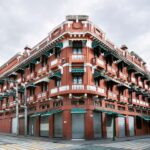
Then comes one of the more architectural stops on the list: General Directorate of Posts and Telegraphs of Guatemala, formerly Palacio de Comunicaciones. This building was designed by Rafael Pérez de León and Enrique Riera, built during Jorge Ubico’s government era.
Here’s what makes it interesting: construction began in 1938, and the first phase was inaugurated two years later, tied to a presidential birthday celebration. Additional phases were completed over the next five years.
You’re basically watching the government design and infrastructure decisions turn into stone. Posts and telegraphs were the highway system for ideas before the internet. Standing here, you can connect the earlier “printing and newspaper” theme to this later “information networks” theme.
Plan about 15 minutes, and no admission tickets are included.
Stop 6: Casa Ibargüen and the old Beltranena palace (1778)
At Casa Ibargüen, you step into a building with a long timeline. The Ibargüen House in Zone 1 used to be the Beltranena palace, built in 1778. Today, it serves as headquarters for the Foundation of the Historic Capital Center.
This is a useful stop if you like your history with a practical purpose. A lot of historic building tours end with viewing. This one points you toward preservation and stewardship, even if you’re only seeing it for about 30 minutes.
Admission isn’t included, so expect an outside-focused experience and a guided explanation rather than a ticketed interior.
Stop 7: Plaza de la Constitución, independence energy, and kilometer zero
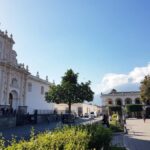
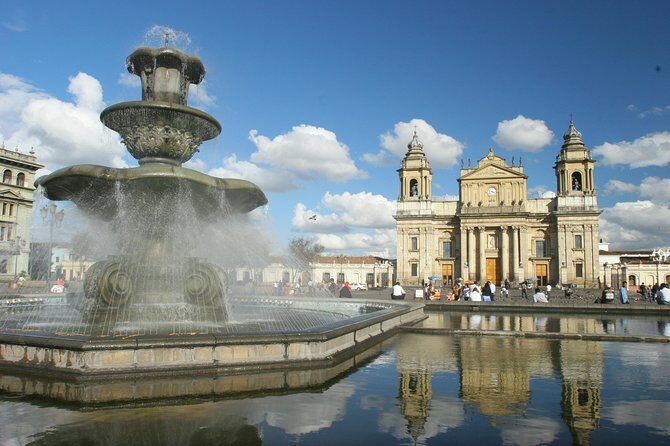
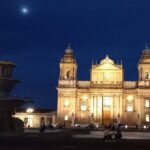
Now you hit the heart of downtown at Plaza de la Constitución, also known as Central Park. This is the largest square in Guatemala, ringed by major landmarks: the National Palace to the north, the Metropolitan Cathedral to the east, the Portal of Commerce to the south, and the Centennial Park plus National Library to the west.
The guide connects the plaza to major national moments, including Independence Day celebrations and concerts and speeches, plus student comparsas and protests like Huelga de todos los Dolores. The plaza is also described as the scene of public demonstrations and criticism directed at the government.
One detail that makes the stop feel concrete: the main entrance of the National Palace is kilometer zero for all roads in the republic. That’s the kind of marker you can’t forget once someone points it out.
You’ll get about 15 minutes at the plaza. Use it wisely: quick photos, a moment to cool down, and then brace for the last push into cathedral and market.
Stop 8: Metropolitan Cathedral of Santiago de Guatemala
Next is Catedral Metropolitana de Santiago de Guatemala. You’ll hear how the cathedral has lived through more than 200 years of history, including two major earthquakes, independence, and a revolution. You also learn that on July 23, 1860, a new Carrara marble altar was placed inside.
This is one of those stops where the guide helps you see a building like a timeline. The structure isn’t just pretty; it’s an archive of events and repairs.
You’ll have about 15 minutes here, and since admission tickets aren’t included, don’t assume you’ll have extra interior time beyond what the guide can fit into the walk.
Stop 9: Mercado Central and why it exists
Then you swing into Mercado Central, and this is where the tour turns from official power to everyday life.
The background is surprisingly detailed. Not long before independence-era shifts, the area east of the cathedral had an abandoned square (Plazuela de El Sagrario) and a semi-destroyed temple chapel, plus a cemetery that was closed due to excess burials. Dr. Mariano Gálvez pushed to convert that space into a market that met public needs, which required moving the cemetery. The plan hit trouble when freshly buried corpses were exhumed prematurely, linked to fears around cholera, and ecclesiastical authorities resisted because it was sacred land.
This is one of the reasons I like this stop. It ties health, politics, and religion to something you can actually see and smell: food, goods, and real commerce.
You’ll have about 20 minutes here. No admission tickets are included, and the market is a great place to grab snacks or a full lunch even though lunch itself isn’t included on the tour. If you want a sit-down meal, you might find options close by depending on what’s open that day.
Stop 10: San Martín in the old Pavón House, then you’re free
To finish, you move to San Martín • Centro Histórico, housed in the revitalized old Pavón House on Paseo de la Sexta and 10 street. It’s described as a bakery and one of the cosier restaurant stops in the San Martín chain.
This final phase is a nice decompression moment. After churches and markets, you get a calmer setting where you can decide if you want a coffee or a quick bite. Coffee and tea aren’t included, so you’d pay there if you want it.
After the tour, you end back at Plaza de la Constitución. From there, you’ll have time to walk or head back to your hotel. The guide can also help you with Transmetro, pointing you to where you’d get off for the hotel area, which is a genuinely useful way to avoid guessing.
The guide factor: strong English and real city context
The best tours don’t just show you sights; they connect them. That’s where the guides shine. In the trip stories here, Armando and Fidencio stand out for being friendly and informed, with English that’s clear enough to ask questions without feeling lost. One guide’s background includes working in Guatemala and previously being a firefighter, which adds a grounded, street-level way of thinking.
You’ll also hear explanations that go beyond dates and names, including how government structure and architecture fit into Guatemala City’s development. That’s how you walk away feeling like the city makes sense, not just like you collected ten photos.
Who this tour suits best (and who might not love it)
This is a great match for first-timers who want a smart orientation to Guatemala City’s Historic Center / Zone 1 without renting a car. It’s also ideal for budget-minded travelers because public transportation is included and you’re not paying for fancy vehicles to move short distances.
It works well for families too. One family story included a small child, and the guide handled the day with patience and comfort. If you travel with kids, just note that you’re walking in heat and moving between multiple short stops.
You might not love it if you want an extremely fast pace or a strictly museum-focused day. Most stops are brief and centered on landmarks and explanations, not long ticketed interior time.
My practical checklist for a smooth morning
If you’re booking this, set yourself up for comfort.
Bring:
- Water and sunscreen (the route runs outdoors and heat is real)
- A hat and comfortable walking shoes
- Some cash or card for coffee/tea and any lunch you want at Mercado Central
- Patience for a route that prioritizes explanation, not speed
You should also plan your expectations around admission. Every listed stop notes that admission tickets are not included, so if you’re hoping for lots of paid entry, you’ll want to adjust your plans.
Should you book Guatemala City Walking Tour and public bus?
Yes, you should book it if you want a well-structured introduction to Guatemala City’s core. The bus fare included piece makes it strong value, and the route covers the kind of landmarks you’d otherwise have to piece together on your own. Ending at Plaza de la Constitución is also convenient because you can keep going at your own pace.
I’d think twice if you’re the type who gets restless with a slower flow. The experience is designed for learning and not for racing through the city. If you want a fast checklist only, you may find yourself wishing it moved quicker.
For most people—especially first-timers—this is a smart way to see a lot of Zone 1 without feeling lost.
FAQ
How much does the Guatemala City walking tour cost?
The price is $30.00 per person.
How long is the tour?
It lasts about 2 hours to 2 hours 30 minutes.
What time does the tour start?
The tour starts at 10:30 am.
What’s included in the $30 price?
Public transportation is included.
Are admission tickets included for the stops?
No. Admission tickets are not included for the listed stops.
What are the start and end points?
It starts at Westin Camino Real, Avenida La Reforma, and ends at Plaza de la Constitución.
How many people are on the tour?
The tour has a maximum of 15 travelers.