REVIEW · ANTIGUA
Fliteboard EFoil Lesson
Book on Viator →Operated by Falmouth Ocean Club · Bookable on Viator
Flying over water feels unreal. This Fliteboard eFoil lesson in Antigua’s English Harbour turns quick theory into real board control, with certified national instructors like Jaycee/JC leading you from first contact to actual foiling. I especially like how you progress fast (most people are up standing within the first hour if you listen closely), and how the team keeps things fun without skipping safety. The main consideration is simple: you are learning balance on a moving platform, so you’ll do better if you can stay calm, follow directions, and be ready for some athletic effort.
The structure is straightforward: a short lesson on land (about 15 minutes) and a hands-on water session (about 60 minutes). You meet at 268J+XC8 at Dockyard Drive in English Harbour, and the activity ends back at the same spot. This is also a private setup, meaning it’s just your group, which helps you get more attention during those first wobbly moments.
In This Review
- Key things I’d bet on for your Antigua eFoil lesson
- Fliteboard eFoil in English Harbour: what makes this lesson click
- Getting to Dockyard Drive in Antigua (and why location matters)
- The 15-minute land session: the rules and mechanics you need
- The 60-minute water practice: lying down, knees, then standing
- Meeting Jaycee/JC energy: coaching that keeps you calm
- What you’ll likely be able to do by the end
- Price and value: is $185 per person a good deal in Antigua?
- Who should book this lesson (and who should pause)
- Practical tips so you get the most out of your session
- Should you book the Fliteboard eFoil lesson in Antigua?
- FAQ
- How long is the Fliteboard eFoil lesson in Antigua?
- Where do I meet for the lesson?
- How much does it cost?
- Is this a private activity?
- Do I need experience to take the lesson?
- What teaching happens during the lesson?
- Can I bring a service animal?
- What is the cancellation policy?
Key things I’d bet on for your Antigua eFoil lesson
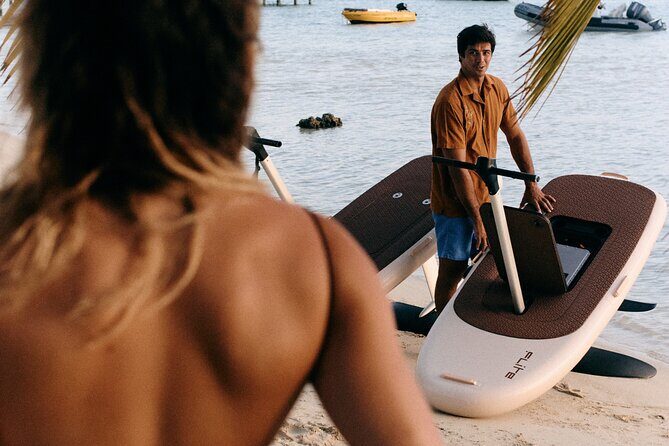
- 15 minutes on land first: you learn the rules and how the board works before you hit the water
- 60 minutes in the water: the real learning happens lying down, then kneeling, then standing
- Certified coaching: instructors work closely with you the whole time, including quick confidence boosts
- Warm, sheltered harbour conditions: the setting makes it easier to focus on technique instead of chaos
- Private group format: you’re not sharing your instructor time with a crowd
- Practical progression: people often go from beginner to foiling within the session
Fliteboard eFoil in English Harbour: what makes this lesson click
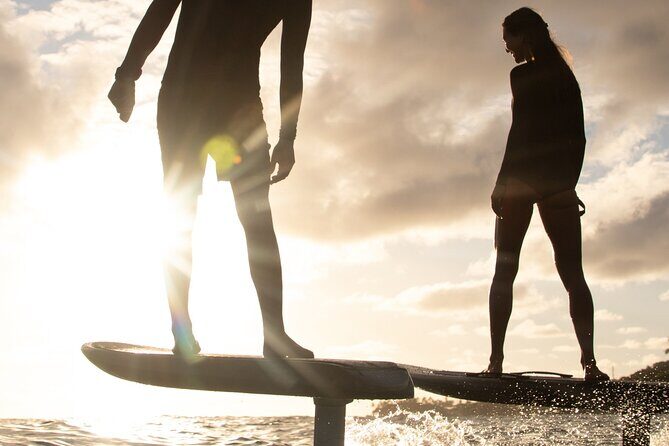
In Antigua, the best part of doing an eFoil lesson is that you don’t just watch the sport—you learn the handful of skills that make it possible. You start grounded in a short theory session, then you move right into practice so the concepts actually stick. It’s a smart way to keep your brain from overheating while your body is trying to balance.
What I like here is the pacing. The lesson is long enough to matter—about 1 hour 30 minutes total—but short enough that you’re usually still sharp at the end. That matters because eFoiling is equal parts technique and calm breathing, especially at the beginning.
And the harbour matters. The reviews describe Antigua’s harbour as warm and sheltered, and that’s exactly the kind of water where beginners can learn without feeling like they’re fighting the environment. You can focus on what your instructor is telling you: posture, throttle control, and how to move your weight.
You can also read our reviews of more tours and experiences in Antigua.



Getting to Dockyard Drive in Antigua (and why location matters)
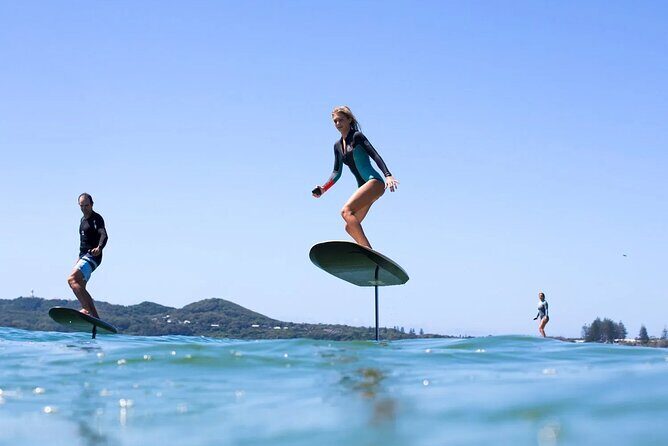
You’ll start at 268J+XC8, Dockyard Drive, English Harbour, Antigua and Barbuda, and the lesson ends back at that meeting point. That end-back-here setup is practical. No long shuttles. No extra transfer time that eats your session.
English Harbour is also the kind of area where you expect a lot of water activity. That’s good for first-timers because the setting feels familiar fast—you’re not wondering if you’re in the right place. The course runs under safety regulations and supervision, so you’re in an environment that’s built for water sports, not a random shoreline.
The location is also listed as near public transportation, which is handy if you don’t want to rely entirely on a taxi. If you’re basing yourself around English Harbour, this can fit neatly into a day that’s already packed with food, sightseeing, and beach time.
The 15-minute land session: the rules and mechanics you need
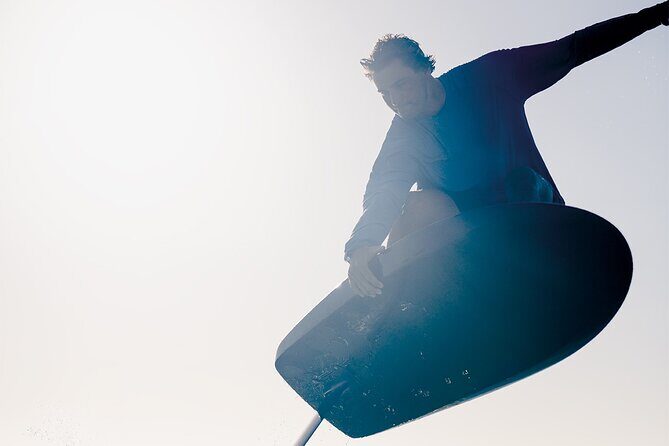
This lesson starts with a short theory session on land (about 15 minutes). Don’t treat that part as filler. It’s where you learn how the eFoil works and the rules for using it the right way. That’s the difference between feeling lucky and feeling in control.
On land, you’ll get familiar with the board and the basic technique cues you’ll use in the water. You’ll also learn the do’s and don’ts so you’re not experimenting blindly. That’s important because eFoils can be thrilling fast, and it’s your instructor who keeps your learning curve safe and efficient.
I also appreciate how the theory is paired with what comes next. The lesson doesn’t just talk—you’ll immediately apply what you learned. The board approach is progressive: you begin in water lying down, then moving to kneeling. So your land instruction helps you understand why you start that way.
The 60-minute water practice: lying down, knees, then standing
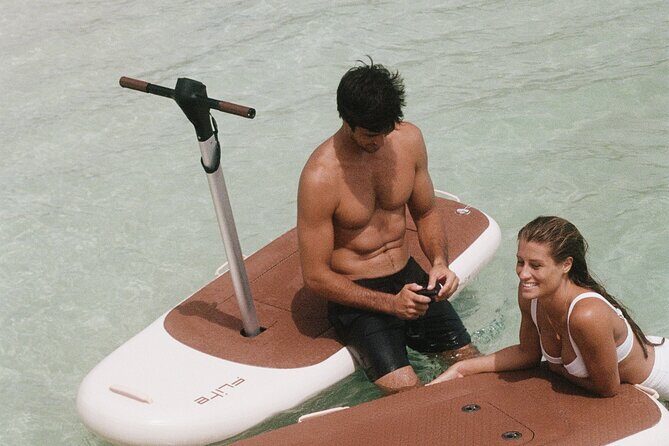
Once you’re in the water, the session is built like a skill staircase. You won’t jump straight to standing. Instead, you’ll start lying down to get comfortable with how the board behaves and how it responds. Then you’ll move to kneeling to practice your control and your body position before committing to standing.
This sequence is great for first-timers because it reduces the number of things going wrong at once. If you’re brand new, standing is often the hardest part. Learning on your stomach and knees first means your brain gets time to figure out what stable posture feels like.
As you build confidence, you’ll start making your first attempts at standing up. The key detail is that you’re assisted closely the whole time by certified instructors. Reviews back up that hands-on support—people mention being standing and foiling within about an hour, and in some cases sooner, because the team is actively working with them, not just handing out gear and hoping.
Meeting Jaycee/JC energy: coaching that keeps you calm
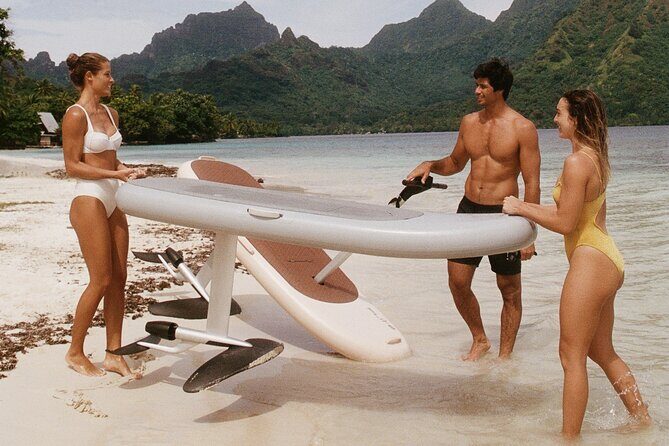
The name that pops up in the reviews is Jaycee (also written as JC). Multiple people highlight him as laid back, helpful, and effective at getting students flying. That’s a big deal because eFoiling isn’t just about strength—it’s about confidence.
A good instructor does two things at once. First, they give you clear technique cues you can repeat under pressure. Second, they manage your energy so you don’t panic when the board isn’t doing exactly what you imagined in the first few seconds.
From the feedback, the instructors keep the atmosphere relaxed and friendly while still treating safety as a priority. One review specifically calls out that people were standing very quickly and then foiling not long after. That tells me the coaching is structured to get you from awkward to functional fast.





What you’ll likely be able to do by the end
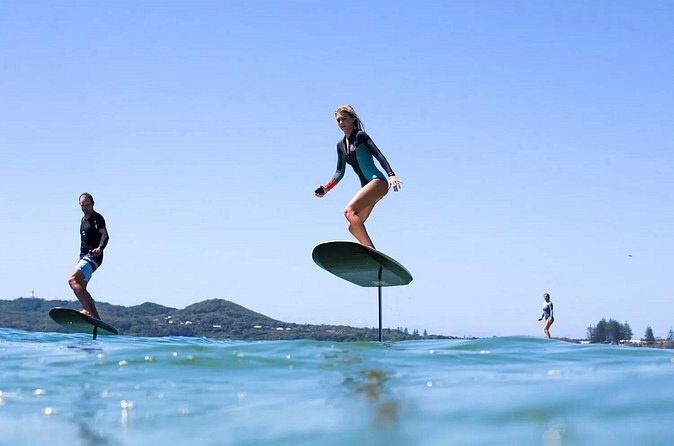
You should expect a genuine learning arc during the 60 minutes in the water. The lesson is designed so beginners can go from first attempts to more stable control before the session ends. Reviews repeatedly mention standing and foiling within about an hour, and some people even describe turning with ease by the end.
That doesn’t mean every person will match the same timeline. Your progress depends on how quickly you adapt to balance and how closely you follow instructions. But the overall structure—progressive body positions plus close assistance—gives you a real shot at ending the lesson feeling like you actually learned a skill, not just tried something once.
If you’re the type who gets nervous when things go sideways, this is still doable. The platform starts by giving you a lower-stakes way to interact with the board (lying and kneeling first). By the time you’re standing, you’ve already solved several smaller problems.
Price and value: is $185 per person a good deal in Antigua?
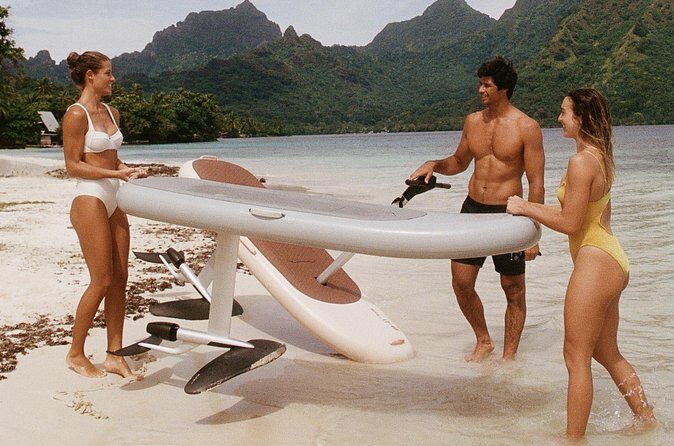
At $185 per person for about 1.5 hours, you’re paying for the full package: equipment, supervision, safety oversight, and—most importantly—active instruction while you’re trying to master a new sport. That’s not cheap, but it’s not random spending either.
The value angle here is your time-on-task. You’re not watching from shore for most of the session. You get real water practice built into the schedule: theory on land for about 15 minutes, then around 60 minutes actually learning with the board. That’s what makes eFoil lessons different from many “thrill” experiences that are mostly waiting.
Also, because it’s private for your group, you’re more likely to get attention when you need it. In a skill-based activity, that attention can cut down frustration and help you improve faster—exactly what the reviews suggest when people report standing quickly and foiling within the session.
If you’re comparing options, think of it like this: you’re paying to remove uncertainty. The instructors help you avoid the trial-and-error part that could waste your limited time. That’s worth money.
Who should book this lesson (and who should pause)
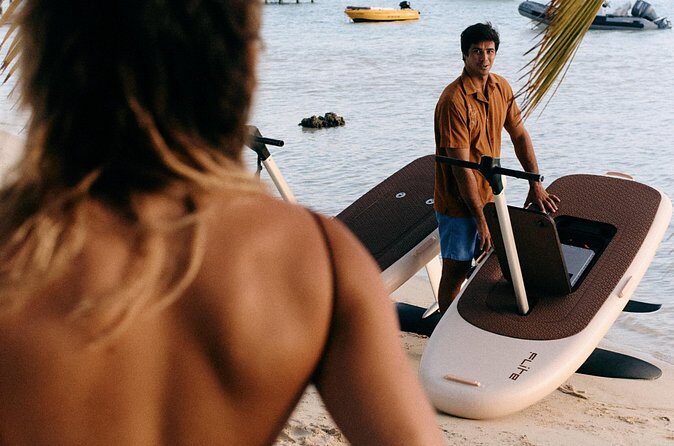
This is a good fit if you’ve got curiosity and you’re willing to learn. The listing says most travelers can participate, and the structure is beginner-friendly: lying down, then kneeling, then standing with close assistance.
It’s also a strong choice if you want a high-impact experience without spending the whole day on logistics. This is about 1 hour 30 minutes, and it ends back where it starts. You can pair it with other English Harbour plans without needing your schedule to be flexible all day.
It may be a consideration if you’re prone to motion discomfort or you know you struggle with balance. The lesson does start with progressive positioning, but it’s still a physical activity. If you can’t comfortably follow safety instructions and keep your posture under coaching, your learning will likely be slower.
And if you’re bringing a group, the private format can be a plus. People in the reviews include adults and teenagers with their dads, which suggests the sport can work across ages as long as everyone is comfortable with the basics and the instructor’s guidance.
Practical tips so you get the most out of your session
I’d plan to treat this like a coaching session, not a photo shoot. Your progress depends on listening and adjusting quickly. The best thing you can do is show up ready to learn the technique cues and keep your movements controlled.
Wear gear you don’t mind getting wet, and keep your focus on what your instructor is telling you during transitions. The lesson is designed to go from lying down to kneeling to standing, and each stage has its own body-position goals. If you try to skip steps internally, you’ll fight the process.
Also, remember that the harbour is part of the equation. The reviews describe Antigua’s harbour as warm and sheltered, which helps beginners. Even so, conditions can shift. Your job is to stay calm, follow instructions, and let your instructor adjust the plan if needed.
Finally, consider how you’ll share this day with your group. Because it’s private, you can ask the instructor to focus on what matters most to you: getting comfortable quickly, learning standing technique, or improving control for turning.
Should you book the Fliteboard eFoil lesson in Antigua?
If you want one clear, beginner-friendly way to try eFoiling in Antigua, I think this lesson is a strong booking. The structure is sensible: brief theory, then enough water time to actually learn. The instruction seems hands-on, and the repetition of results in reviews—standing and foiling within the session—suggests the coaching is built for success.
Book it if you’re excited by the idea of flying over the water and you want to learn the basics with safety-first supervision. It’s also worth it if you value private attention and a lesson plan that moves at a pace beginners can handle.
Skip it only if you know you can’t manage balance-based activities or you need an experience that’s mostly passive. This is an active sport with a learning curve, and you’ll have the best time when you lean into instruction.
FAQ
How long is the Fliteboard eFoil lesson in Antigua?
The lesson is approximately 1 hour 30 minutes total, with a short theory session on land (about 15 minutes) and a practical session in the water (about 60 minutes).
Where do I meet for the lesson?
You meet at 268J+XC8, Dockyard Drive, English Harbour, Antigua and Barbuda.
How much does it cost?
The price is $185.00 per person.
Is this a private activity?
Yes. It’s listed as a private tour/activity, meaning only your group will participate.
Do I need experience to take the lesson?
No experience is required. The lesson is designed for beginners, starting with practice lying down and kneeling before attempting to stand, with close assistance from certified instructors.
What teaching happens during the lesson?
You start with a short theory session on land about how the eFoil works and the rules for using it safely, then you practice in the water.
Can I bring a service animal?
Yes. Service animals are allowed.
What is the cancellation policy?
Free cancellation is available. You can cancel up to 24 hours in advance for a full refund. If you cancel within 24 hours of the start time, the amount you paid is not refunded. The cut-off is based on local time.