REVIEW · EL REMATE
Tikal Sunset, Archeological focus and Wildlife Spotting
Book on GetYourGuide →Operated by Gem Trips · Bookable on GetYourGuide
Tikal at sunset feels like a living museum. I like the photo-friendly pacing and the time you get at key ruins from Trail Gate through the Great Pyramid. I also like the wildlife spotting along forest trails, guided with real care for what’s moving in the canopy. One possible drawback: the Tikal entry fees for day and sunset are not included, so you’ll want to budget about US$34.
The guides make a difference here. In the best runs, you’ll be with Marlon (English/Spanish) and a driver who keeps things smooth and safe, like Lúcio in one of the bookings I read about, plus mosquito repellent applied before the walk. You’ll also get real comfort items for the day, including lunch with gluten-free and vegan options, and water refill in the vehicle.
Plan for a long day. This runs about 7–13 hours depending on season and schedule, and you’ll return after dark in most cases—so bring a flashlight and rain gear even when the forecast looks calm.
In This Review
- Key things that make this Tikal sunset tour worth it
- Getting to Tikal: pickup flow and why the start time matters
- From Trail Gate to Palace of Grooves: the start that sets the tone
- Great Plaza and the restored heart of Tikal
- Temple V: the North-facing temple that breaks the pattern
- Seven Temples Square and why the ball courts feel personal
- The Lost World: your wildlife soundtrack and the Teotihuacan link
- Sunset from the Great Pyramid and what happens after the lights drop
- Wildlife spotting: when nature trails beat a straight-line march
- Food and comfort: lunch plus water refill where it counts
- Price, entry fees, and when this is a smart value
- What to bring (and what not to bring) so the day stays easy
- Who should book this Tikal sunset tour
- Should you book Tikal Sunset with Gem Trips?
- FAQ
- What’s the starting and ending timing for the Tikal sunset experience?
- Is lunch included, and are there dietary options?
- Are entry fees to Tikal included in the price?
- Does the tour include water?
- Do I need to bring a flashlight?
- What kind of guide languages are offered?
- Is the tour private or small group?
- What are the rules about phones, drones, or other gear?
- Can I request a different pickup or drop-off location?
- I’m staying in San Miguel. How does pickup work?
Key things that make this Tikal sunset tour worth it
- Guaranteed departure even for 1 guest, with no extra charge, so you can get a true private feel.
- Nature-trail walking to spot wildlife, not just a fast ruins loop.
- Marlon-style interpretation of architecture, from Palace of Grooves to Temple V to the Lost World.
- Sunset waiting with a plan, then a night walk back using flashlights.
- Lunch plus water refill, with gluten-free and vegan options included.
- Camera help at the best angles, with stops designed for photos.
Getting to Tikal: pickup flow and why the start time matters
You’re picked up from your hotel in San Ignacio (Belize) or along the Flores/Tikal/El Remate/Santa Elena/San Benito/San Andrés/San José Petén area—pickup is at the door, so you don’t waste time hunting for a meeting point. There are lots of pickup and drop-off options listed, which matters in practice: the closer you are to the route, the more time you keep inside the park.
The tour duration is broad (7–13 hours). That range isn’t fluff. It usually reflects how long you linger at the ruins, how the day’s light works for photography, and how long you need to wait for sunset. By June (longest day) you end around 19:30; by December (longest night) closer to 18:30.
If you’re a photographer, this timing is a big deal. Tikal ruins can look flat in harsh midday sun. Here, the day’s structure pushes you into softer light later, especially around the Lost World and the Great Pyramid viewpoint.
You can also read our reviews of more tours and experiences in El Remate.
From Trail Gate to Palace of Grooves: the start that sets the tone
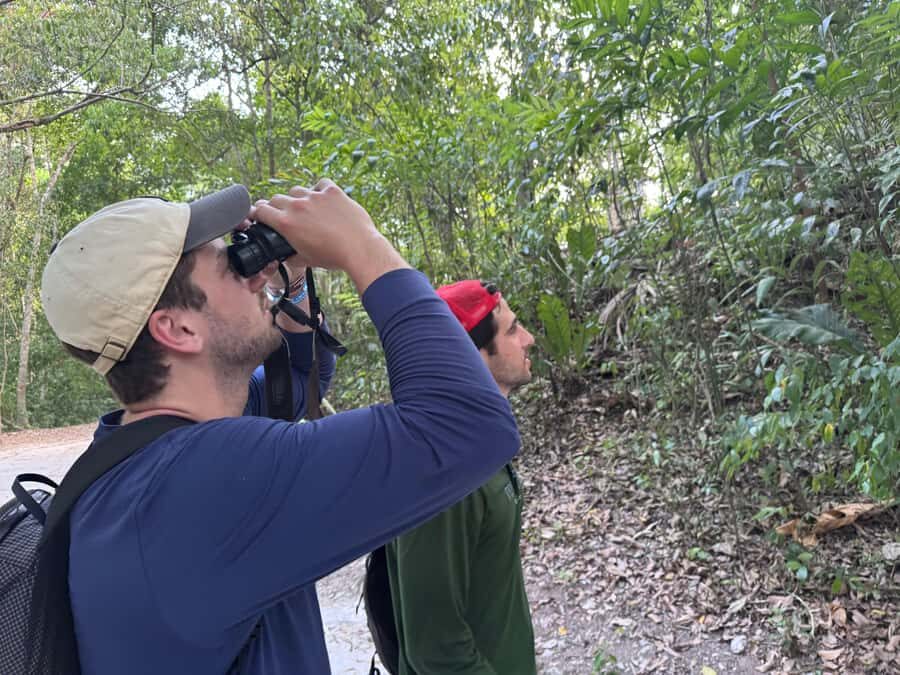
Most Tikal tours begin fast and end faster. This one begins with a walking rhythm through the park. You start at the Trail Gate of Tikal National Park, then move along nature trails where your guide watches for wildlife. That means the first part of the experience is already Tikal, not just a warm-up to the ruins.
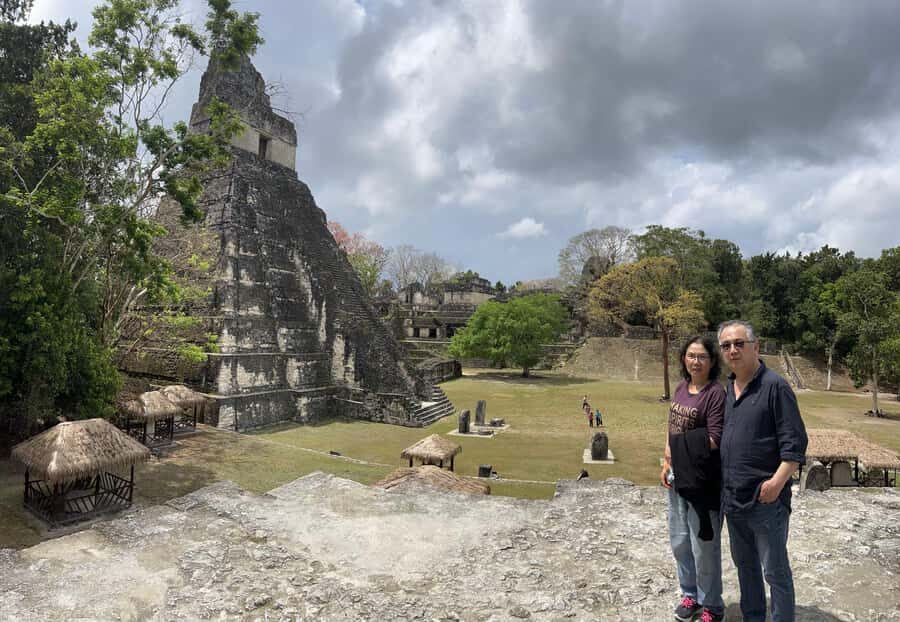
Then you reach Group G, the Palace of Grooves. The name is literal: the palace walls show a distinctive groove pattern that’s still well preserved. The guide explains it as the residential palace of Yikin Chaan K’awiil, the 27th ruler in Tikal’s dynasty and described as the wealthiest—different from many rulers who lived in the more central complex. Practically, this is great for a first stop because it gives you quick context. You’ll understand what you’re seeing before the scale of the Great Plaza pulls you in.
What you might like: the palace is specific and learnable. It’s not just “some carvings over there.” You get architecture details you can frame in photos.
Great Plaza and the restored heart of Tikal
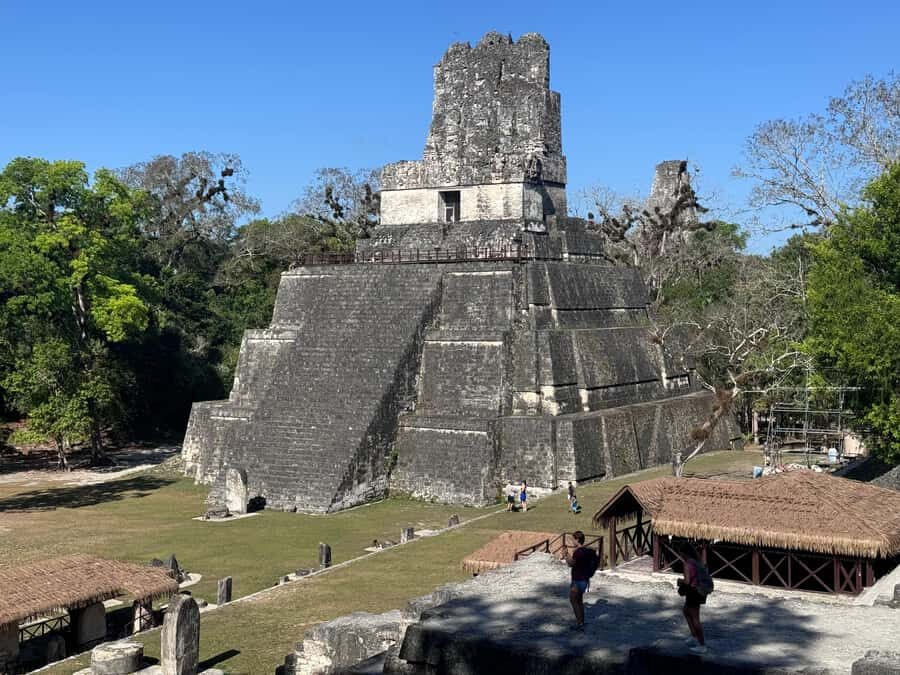
After Group G, you move into the Great Plaza, the site’s largest “energy” zone and also one of the most restored areas. That restoration matters when you’re standing there trying to imagine how it looked working. You’ll see multiple stelae, including carvings tied to portraits of Tikal kings.
The guide also brings you to surrounding structures:
- Temple I
- Temple II
- North Acropolis
- Central Acropolis
One useful detail you’ll hear: the Great Plaza complex was excavated in the 1960s by the Museum of the University of Pennsylvania. That gives the story behind what’s visible today, and why some areas feel more “open” than others.
A small practical note: this is where crowds can be heaviest in general, and this tour’s value is in the way you’re guided through it with enough time to breathe and photograph. You’re not trapped in a rush line.
Temple V: the North-facing temple that breaks the pattern
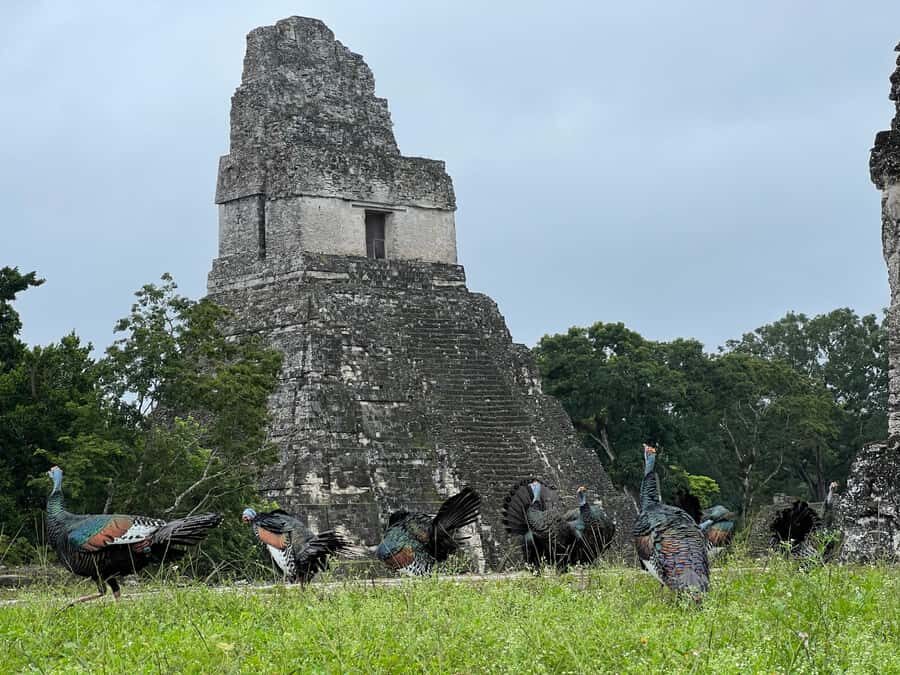
Next is Temple V, built around 650 AD. The standout feature is its rounded corners, and the guide points out that it’s the only temple facing North. That directional detail can be surprisingly helpful when you’re trying to orient yourself in Tikal—especially if you’re returning for sunset views later.
Temple V is also described as the third tallest of Tikal, but it’s the “differentness” that makes it memorable:
- It has a distinctive architecture compared with most other temples.
- It was restored in 2002.
- It was one of the earlier discoveries: back in 1848, the roof comb on the back was totally vertical and never covered by trees, so it was visible from far away toward the South, including the direction of Flores where the discoverers arrived from.
If you care about architecture, this is one of the best stops in the whole day because it gives you a reason it matters, not just a label.
Seven Temples Square and why the ball courts feel personal
You’ll then reach Seven Temples Square, a plaza where temples sit in a line and the design includes three ball courts and three palaces, making the number thirteen—a sacred number in Mayan culture.
The practical magic here is that the space doesn’t feel like a random ruin. It reads like a designed social zone: sports plus aristocracy. And the guide adds one more fact that helps you remember it: it includes the only triple ball court found so far in Mesoamerica.
Even if you’re not a ball-court nerd, this stop works because it lets you shift from single-building focus to urban planning. You start seeing how Tikal organized movement, ceremony, and status.
The Lost World: your wildlife soundtrack and the Teotihuacan link
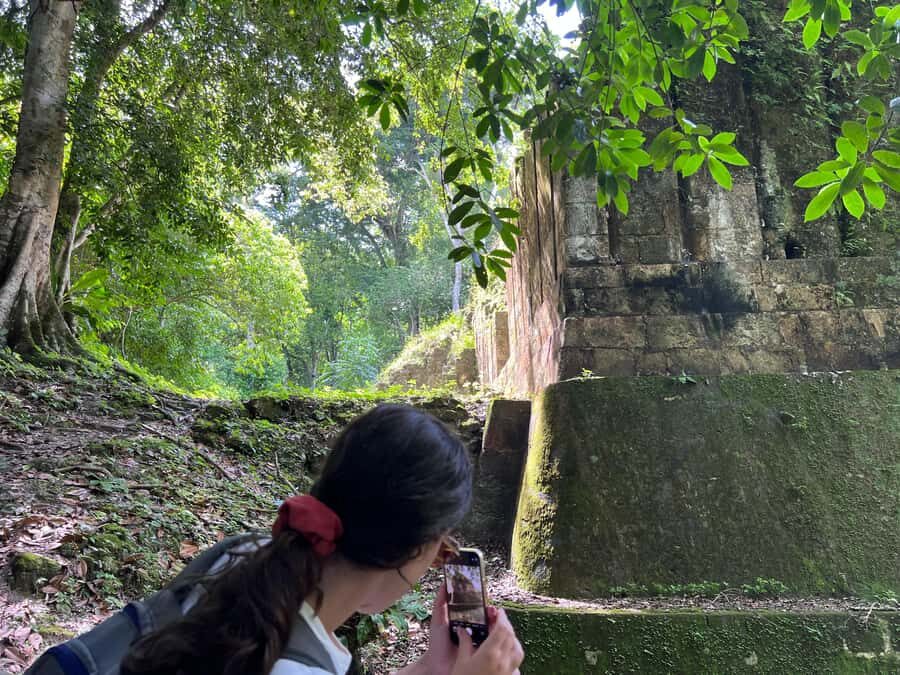
The day ends with The Lost World area, timed so you can wait for sunset from the top of the Great Pyramid. You’ll spend time here before the sun drops, and the wait isn’t wasted. The guide explains this area as the astronomical observatory of Tikal. The Great Pyramid is the main point to watch the stars, planets, and the sun, with three buildings on the East side used to mark seasons.
While you wait, you’re also listening. One of the bookings I read highlighted how interesting the wildlife sounds became as the light shifted. That’s the moment when Tikal stops being just a set of stones and starts being a living environment again.
The lower plaza in The Lost World adds another layer: it has a central podium with Teotihuacan-style architecture. That’s offered as evidence of cultural interaction between two ancient cities—Tikal and Teotihuacan—meaning you aren’t just looking at local Mayan development. You’re seeing the idea that ideas moved through the region.
This stop is especially good for photographers because you’re capturing both skyline angles and the changing forest light.
Sunset from the Great Pyramid and what happens after the lights drop
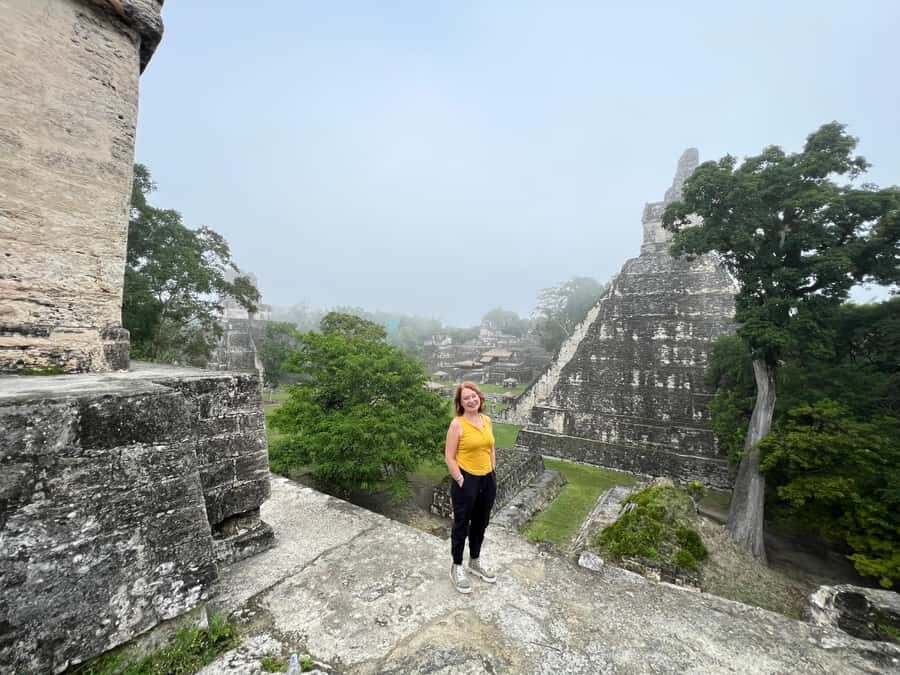
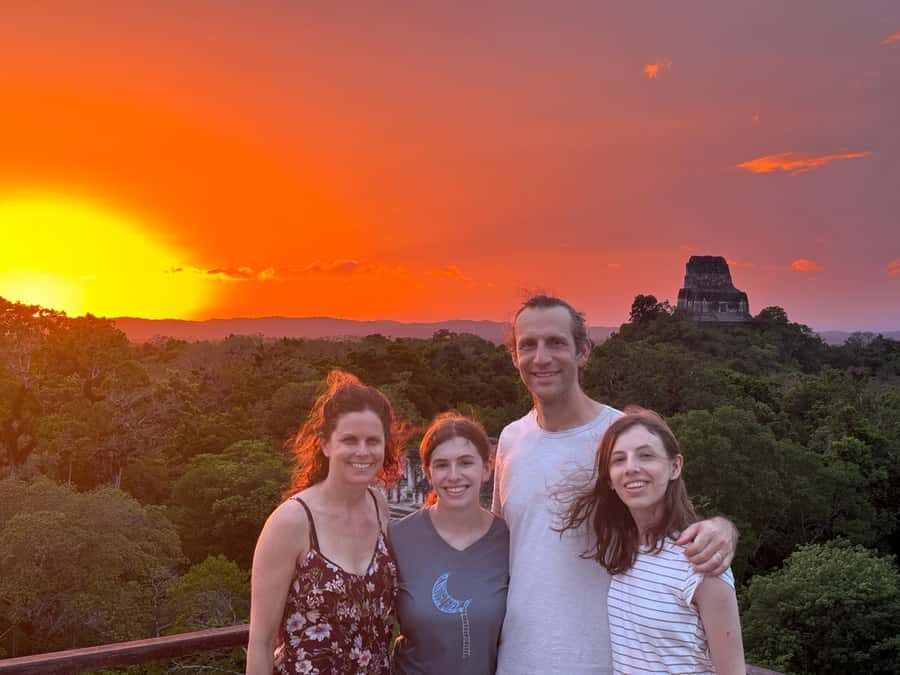
Once you’re up there for sunset, you’re in the best place for that classic Tikal feeling: the jungle closing in, the ruins holding steady, and the sky doing its thing. The tour is built so you have enough flexibility to make that work, and not every second is pre-timed like a theme-park ride.
After sunset, the park quiets down. One of the bookings described a shift into near silence once bird and monkey calls faded. Then came stargazing and a return in darkness using flashlights.
That night-walk part is why you should not skip your practical gear:
- Flashlight
- Comfortable clothes you don’t mind getting dusty
- Rain gear, because sudden tropical weather happens
You might even get lucky with small wildlife sightings at night—scorpions and tarantulas were mentioned in a booking—though it’s not something you should count on every day.
Wildlife spotting: when nature trails beat a straight-line march
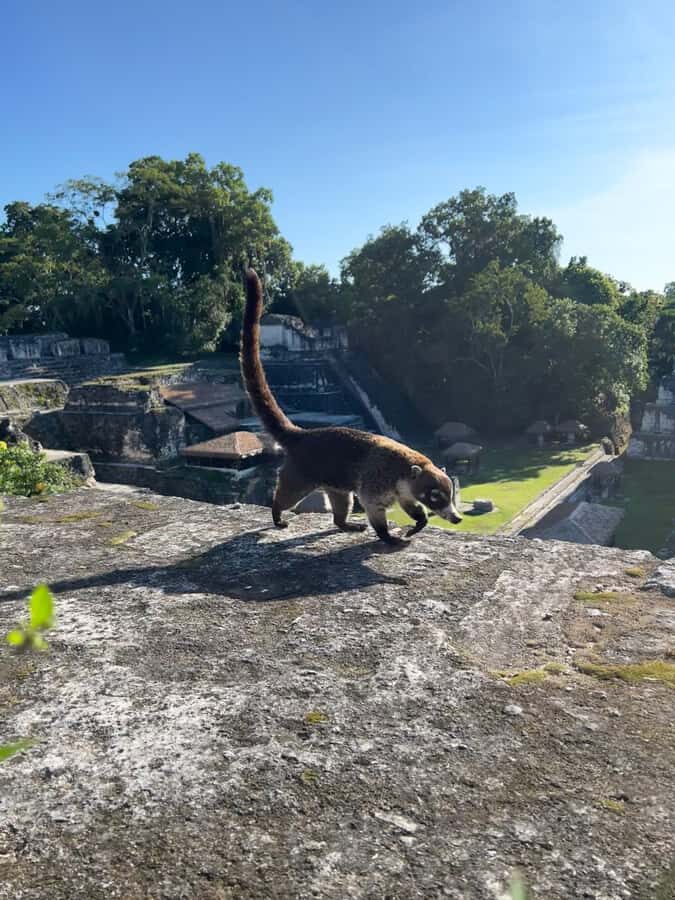
This tour explicitly leans into wildlife, using nature trails with a high chance of spotting species. The key is your guide’s job: reading the forest for movement and explaining what you’re seeing. One booking described the guide spraying mosquito repellent over the traveler for protection, plus stepping in when a snake moment happened. That’s not guaranteed, but it shows the mindset: safety and awareness.
What this means for you: if you love being outside and don’t want Tikal to feel like only a rock museum, this format fits. You’re learning how to watch.
Also, the tour includes mosquito repellent application. That’s a rare inclusion on many Tikal days, and it’s genuinely helpful because mosquitoes can turn a nice walk into a distraction.
Food and comfort: lunch plus water refill where it counts
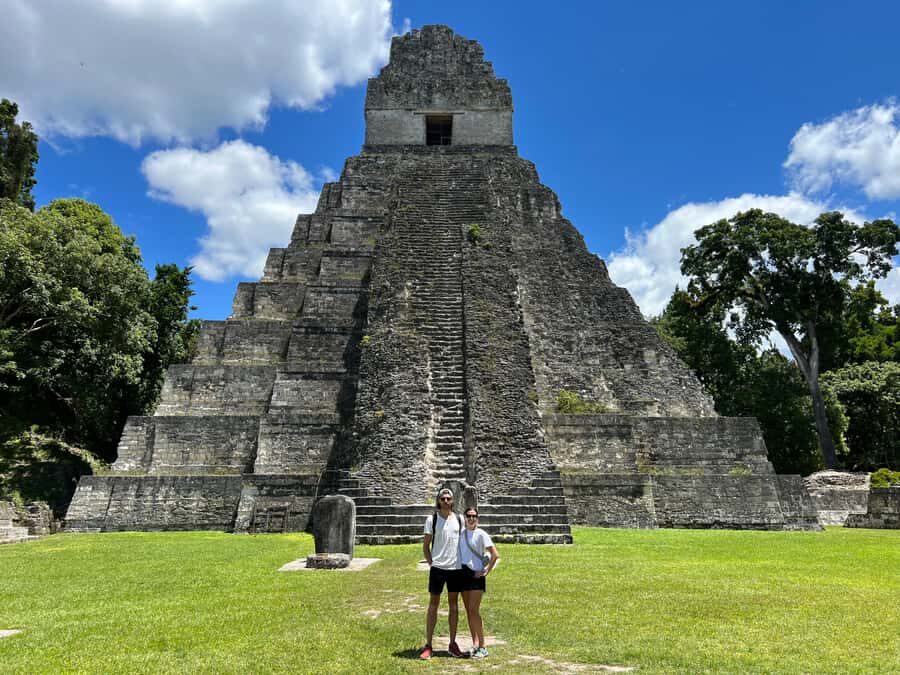
You get lunch (served at Jaguar Inn Restaurant) and water refill in the vehicle. That matters because Tikal days can run long, and “we’ll see about food” is how people end up hungry and grumpy in the jungle.
Lunch includes gluten-free and vegan options, which is a strong value add if you’ve had trouble finding suitable meals in smaller tour formats. Even if you eat normally, water refill keeps you from rationing your bottle like it’s a survival movie.
Price, entry fees, and when this is a smart value
The price is US$91 per person, and what makes it interesting is how clean the inclusions are. You get transport (air-conditioned vehicle), a professional English/Spanish speaking guide, mosquito repellent application, a Tikal map, lunch, and water refill.
The main extra cost is entry fees. Sunset and day entry fees to Tikal are not included and total US$34, payable for guests 10 years old and on.
So is it worth it?
- If you want a guide who spends time explaining ruins and wildlife, and you want a photo-friendly pace rather than a hurried checklist, the value is good.
- If you’re on a tight budget and don’t care about sunset timing, you might find cheaper ruin-only tours.
There are also ways to reduce entry fees:
- If you’re the only adult in your group and you choose the small group option but at least one more adult reserves for the same schedule, entry fees can be reduced (the info given says it can lower the price by USD34).
- If you have a Guatemalan local ID (DPI) and send a picture, your entry fees may be only US$7.
Net: for many people in the US$91 + US$34 range, you’re paying for time, interpretation, and the sunset-focused structure, not just transport.
What to bring (and what not to bring) so the day stays easy
Here’s the practical kit that matches what the tour requires:
- Comfortable shoes (you’re walking, often uneven paths)
- Rain gear (tropical weather is unpredictable)
- Flashlight (for the dark return)
- Comfortable clothes
And rules you’ll want to know ahead of time:
- No drones
- No bikes
- No pets
- No feeding animals
- No touching animals or plants
- No nudity
If you’re bringing a camera, this is one of those tours where that decision pays off. The tour emphasizes photo time and says the guide will show you the best spots.
Who should book this Tikal sunset tour
This is a great fit if you:
- Want both Mayan ruins and wildlife along the way
- Like photography and want time for angles instead of rushing
- Enjoy having a bilingual guide who explains what you’re seeing in plain terms
- Prefer small-group or even one-guest comfort (the tour notes that they operate with 1 guest with no extra charge)
It’s also listed as wheelchair accessible, which is helpful if you need that option. That said, you’ll still be in a historic site with uneven terrain, so ask about what paths will be used before you go.
Should you book Tikal Sunset with Gem Trips?
Yes, if you want a well-paced Tikal day that treats sunset as part of the story—not an add-on. The biggest reasons to book are the photo-friendly timing, the nature-trail wildlife focus, and the included lunch and mosquito repellent application. Add in the chance of a strong guide partnership like Marlon, and the day tends to feel more like a guided walk through a living place than a rigid ruins checklist.
Only hold back if you’re strictly budget-only and don’t want to pay the extra Tikal entry fees, or if you dislike night walking because sunset ends later and the return happens in low light.
If you like being outside, taking photos, and learning why each plaza and temple was placed where it was, this is the kind of Tikal day you remember.
FAQ
What’s the starting and ending timing for the Tikal sunset experience?
It runs about 7–13 hours. The walking tour ends around 19:30 by June (longest day) and around 18:30 by December (longest night).
Is lunch included, and are there dietary options?
Yes. Lunch is included, and it offers gluten-free and vegan options.
Are entry fees to Tikal included in the price?
No. Sunset and day entry fees are not included, and the total listed cost is US$34 (payable on the day for guests 10 and older).
Does the tour include water?
Yes. There is water refill included in the vehicle.
Do I need to bring a flashlight?
Yes. The tour guidance lists a flashlight as something to bring, especially for the return after sunset.
What kind of guide languages are offered?
The live tour guide is listed as English and Spanish.
Is the tour private or small group?
Private or small groups are available. The tour also notes guaranteed departure and that they operate with 1 guest with no extra charge.
What are the rules about phones, drones, or other gear?
Drones are not allowed. Bikes are not allowed. You also shouldn’t feed animals, touch animals, or touch plants.
Can I request a different pickup or drop-off location?
You’ll need to match your booking option to the pickup location. Drop-off can be at the location picked up or another location, but you must let them know in advance.
I’m staying in San Miguel. How does pickup work?
If you’re staying in San Miguel, you must come by boat to Raices Restaurant in Flores Island for pickup.